Showing posts with label publishing. Show all posts

Saturday, August 01, 2015

Something I Never Thought I'd Say: Meet My Agent

I gave up on literary agents a few years ago. I did have an agent interested, a lovely person, when I was doing an MA in Creative Writing in 2004 and my first story was published- actually broadcast, on Radio 4. She was so nice, she and her assistant even came to my MA graduation ceremony, I was very surprised, I thought this meant I'd made it. This was it! But I lived abroad and although whenever I came back to London we met for a chat, she never seemed to want to talk about my writing. 

I was very naive, it took me a while to realise this was odd. For an agent. When I asked her if she'd talked to any publishers, she said she had but they all said, Come back when she's got a novel. Right. OK. No novel planned so me and Lovely Agent went our separate ways. I sent three stories to Salt Publishing, who were then accepting submissions direct from authors, and in 2007 got the incredible news that they wanted to published my first collection, The White Road and Other Stories. Life-changing. 

Well, then I thought, when TWR was, shockingly, commended by the judges of the Orange Award for New Writers (as it was then, sadly no more) in 2009 that this would mean agents would be if not clamouring (I am a short story writer, I am not entirely deluded) but at least open to suggestion. So I met with a few, and that was fairly terrifying, especially for this introverted writer who is better in writing, not so good at blind dates, especially the literary kind. Well, they mumbled similar things about novels - but added, Could you maybe write longer stories, at least? (Half the stories in the collection were flash fictions, a page or less). 

Well, no, not really. I didn't want to be told what to write.

The thing is, when I didn't think about this side of things, the 'business' aspect, I was really happy with what I was doing. I was writing mostly flash fictions, I'd found homes for many of the stories in lit mags that liked the weird and the surreal - which I had thought no-one outside my head would get let alone want to publish. But there was a part of me that was still sad - I'll admit it, it was hard to see friends getting agents themselves - that at least partly, it seemed, because of the length of what I wrote, the mainstream just wasn't interested. I knew my writing was odd, wasn't the kind of thing that had mass appeal, but I still thought maybe there was a place for me. 

A friend came up with a great analogy: department stores want items, she said, that they can mass produce, sell huge quantities. Every now and then they'll take a specialised, hand-crafted, one-off, a limited edition. But that's not what they want, not what they sell. You and I, she said, write hand-crafted, artisan belts. Yup. 

Still, I tried a few more times, writing to agents who represented friends of mine. But - and of this I am truly ashamed! - I started my letters with "You probably don't want to hear this but I write short stories." OH DEAR! They didn't reply. Who would, given an opening like that! If you're not your own champion, why should someone else be?

So, after that, I stopped. My second collection, My Mother Was An Upright Piano, made up entirely of very short fictions, was published in 2012 by the wonderful Tangent Books, based in Bristol, where I had moved to by then. And having not just one book - my lifelong dream - but TWO seemed miraculous, more than I'd wished for. I was happy. I was writing. What else mattered?

When 18 months ago I was researching for the section on the history of the short story for the book I co-authored, with Courttia Newland, on writing short stories, I started to read a lot about the short story being a "marginalised form", and, as such, a place where writers could experiment, could express themselves more freely because they were not being watched. And it hit me: because I'm not working on a novel, the dominant form in this country, at least, and because no-one's been waiting for me to produce anything - I have been free, I really can write whatever I like! And I am. I've reached a point, after writing fiction for 18 years, where I feel pretty much uninhibited - free to write about whatever I want, in whatever style I want. This is a great feeling!

When I began writing poetry, a few years ago, it did feel like "starting again", slipping down the snake and trying to pull myself back up the ladder. There were technical things to learn, and at first I was very conservative, nervous that the outside world wouldn't consider what I was doing to be "poetry". This is what it's like, I remember - you've got to learn certain rules and then, only then, can you break them, imaginatively, wildly. I was worried, for a bit, that while I felt totally unconstrained in fiction, my "voice" in poetry was different, traditional, didn't quite feel like me. But over the past 6 months something clicked, and I've felt able to let go in poems too, to start to taste that freedom here, boosted immensely by having poems accepted for publication and recognised in competitions, which is what has always helped me with short stories too - I write to connect, with even just one stranger, and when that happens, especially with the oddest of my pieces, it gives me permission, to carry on and to take it even further. Permission has become something I talk about a lot. 

So, now, with two collections published, a book on writing co-authored, and a poetry pamphlet due out in February, all thoughts of agents had vanished. I just felt - and feel - very grateful. And that's when Kate turned up. Literally. She is from the US, she is an agent with Wolf Literary Services in Brooklyn, and she recently moved here, to Bristol, because of her husband's job. Right here. She got in touch, to chat - I thought - about Bristol, about books etc... and we met for a coffee. Honestly, I had no thought about talking to her about my work. I was planning on recommending other writers she might like to check out. But as we talked we discovered we loved the same writers (Aimee Bender, Maggie Nelson) and disliked the same books (not going to tell you those). She also told me she'd happened to read a few years ago one of my short stories, The Special Advisor, that was published in Five Dials, and the way she talked about it was the way every writer dreams that someone will talk about their work. I then told her about the book I was working on for my PhD, a hybrid book that I am aiming to be Uncommercial and Pretty Damn Weird. 

When I got home, I had a think and realised that here was an opportunity it would be silly for me to let pass by. So I got together all the newer short stories, plus some poems, whacked them into some kind of order, and sent them to her. I really wanted to say, Don't worry if you don't like them, let's just be friends! But I stayed professional. I said there was no rush, and really I didn't imagine anything would happen. I thought I was not a very attractive prospect: not a debut author, not under 35, short story writer, weird stuff.

But then, two weeks ago (on my birthday!) I got an email from Kate which said, "I LOVE YOUR WRITING" (in CAPS, yup). It said some more lovely stuff, the main part of which was "I would love to represent you, for this book, your PhD book and beyond". And all the nonsense that had been in my head about not needing this, not wanting this, melted in an instant. I have been so fortunate that people have said wonderful things about my writing over the years, utterly delightful and unexpected things, things they didn't need to get in touch and say. Somehow this was different, this was someone - who had met me in person, too -  saying, I will be your champion. I believe in you, not just for what you've done, but for what you will do too. I want to see that happen, I want to help you continue to flourish.
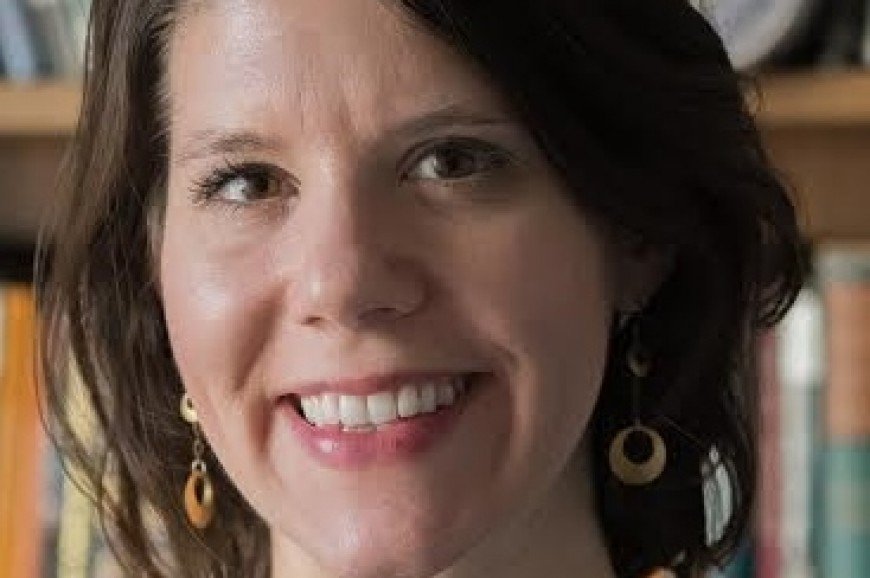
Kate and I met a few days ago to talk more, to try not to gush as much as both of us wanted to, we later confessed - and now agreements have been signed. So, meet my agent: Kate Johnson, of Wolf Literary Services. Had I been trying to write the sorts of things I thought an agent or editor would want, she and I may never have met. Had I kept on thinking after I'd met her that I wasn't the sort of writer who needed/deserved an agent, and not taken that risk, not sent her anything, nothing would have happened.

We are now trying to mould those short stories and prose poems into something collection-shaped, and see what occurs. Nothing is certain, of course. But having Kate on my side has already had an effect on me: the day after receiving her email, I sat down and wrote for 3 hours, I re-started my PhD book, and this time I truly let myself go. I let myself play, be as weird and odd as I love to be, and enjoyed myself immensely. It was only then that I realised how I'd been holding back, not wanting to really experiment. Kate gave me permission to do that. Sometimes, it seems, we don't realise we need that permission until it's been given, until we're released, liberated. Thank you, Kate, you've already changed everything. I look forward to seeing what happens next! 

Monday, April 21, 2014

Why send your work to overseas lit mags?

I have an article up now on The Review Review - a fantastic resource of news, links and articles about literary magazines whose newsletter is really worth subscribing to. Becky asked me to write about setting up ShortStops and when i thought about how to make it appealing to non-UK writers and readers, I realised that the issue of submitting your work outside your own national borders was one that had played quite a major part in my own writing life. Here's a snippet:
When I was finally ready to send my short stories out, I thought first of all the American lit mags I'd been introduced to and loved. I was quite surprised to find (this was a while ago, remember) that many of them weren't set up for overseas submissions – there was much faffing around with postal subs and self-addressed envelopes/postal orders – and when I queried to ask if I might send stories by email, they seemed surprised to hear from a non-American. Surprised and yet delighted to help – some even changed their submissions guidelines to accommodate me and any other non-US-based writers.
Read the rest of the article here >> and check out ShortStops, of course!

Sunday, April 15, 2012

Weird Things Customers Say in Bookshops

This was going to be a fairly ordinary interview as part of a virtual book tour for an author I "only" know from Twitter, but then, on Tues night, I popped in to meet Jen Campbell at her event at the fantastic Edinburgh Bookshop (which I could easily live in) ...and, well, after only planning to stay, umm, 20 minutes, I left three hours later, after 2 glasses of prosecco and much merriment! And... with some lovely photos of the author herself (taken with the Hipstmatic app on my iPhone so they're very "artistic"):


So what is this all about? Well, I don't often laugh out loud while reading a book. It is rare indeed. But Jen Campbell's fantastic Weird Things Customers Say in Bookshops, published a few weeks ago by Constable, had me chuckling, giggling, and interrupting J's reading to make him listen! It is exactly as it says, a collection of some of the weirdest things said to Jen and to other booksellers in bookshops. This is clearly a very good idea for a book - Jen's been interviewed on Radio 4's Open Book program and got lovely mentions in the Guardian and the Daily Telegraph newspapers here in the UK.

I am delighted to have Jen here today: she is a writer and bookseller living in London, a published poet and short story writer. Weird Things is her first book; her poetry collection The Hungry Ghost Festival will be published later this year by The Rialto. She blogs at This Is Not The Six Word Novel. Before getting to my interview with Jen, here's a little taster from the book, which you will have your chance to win:
customer: Doesn’t it bother you, being surrounded by books all day? I think I’d be paranoid they were all going to jump off the shelves and kill me. 
bookseller: . . .

Tania: Your book made me seriously question the sanity of many members of the public. It might almost been seen as a philosophical tract about sense versus nonsense, or a scientific work about the bizarre workings of the human brain. Did you feel you learned anything about the human condition from all these interactions?

Jen: Being able to share these moments, first on my blog, and now as a longer collection in book form is, I guess, my open 'WTF?' question to the world. The fact that the blog posts made their way quickly across Twitter, and made people giggle, validated my own sanity, which I found myself questioning at times when the oddest things that were said to me. You know, doing a double take and inwardly saying to myself: "There is no map of Atlantis... I definitely don't have a book that forecasts the weather for the rest of the year... no, books are not edible... nor do they conduct electricity... and, no, this is not Hampstead Heath; this is a bookshop."
    As to whether it helped me understand the human condition... no, probably not, but perhaps I'm now more prepared ;)
   [Also, I must point out that I would never, ever include quotes from anyone who was actually mentally unstable. These quotes are just rude/odd/bizarre things said by people who should know better.]

customer: I do find it odd that people manage to make a living out of writing books for children. I’m sure any mother could do it. 
bookseller: Why don’t you try it yourself? 
customer: I always mean to, but I’m very busy right now with my pottery class.

T: It's really funny to read - but how did all this make you feel at the time? Especially as a writer yourself, what did you learn from these interactions as to how people interact with books and the book trade?

J: Some of it made me blink and do a double take. Some quotes are funny, and were at the time. There were rude things said to me, which aren't included in the book [my decision] but were included in the blog posts which definitely were not funny. However, the quotes that reoccur quite frequently - price-checking on iphones; people calling up the bookshp for advice on books and then saying they'll go and buy the book on Amazon; one person who thought that all independents were owned by Waterstone's - these definitely show that, for some, there is a lack of understanding when it comes to the book trade.
   A lot of people forget how many people have to be paid for the production of just one book [editors, writer, illustrator, designers, production, marketing, an agent, wholesaler, and then the bookshops who have to pay rent, staff, business rates etc], and think that £7.99 for a paperback is too much. It's not a massive sum; it's less than the price of a cinema ticket or a take-away, and a book can change your life. Sounds corny, but it's true. I love a good curry as much as the next person, but one tikka masala's probably not going to change my outlook on life.
   Also, the big one: "It must be lovely working in a bookshop; you get to read all day." *sigh* I wish I had a penny for every time this was said to me.

T: I loved your section at the end with quotes from other booksellers, do you think there's something about a bookshop that leads to this kind of craziness? How do you try and explain it?

J: I think anyone who has worked in retail has weird stories to tell. Bookshops in particular - especially antiquarian ones - seem to attract odd requests. Perhaps because, in the case of the latter, the books are old, read long ago and we associate memories with them that perhaps don't make sense to us, so when we try and describe a book to someone else it comes out sounding a little odd. But that only accounts for 1% of the strange requests and those are understandable - what's not is when someone might say they read a book and it was blue, and they were three, and truly expect you to know which book they mean. Sometimes I can find these books, and those are amazing moments, but normally with a little bit more to go on than just one colour.
   I don't think I can try and explain the international nature of Weird Things... - I've no idea. But at least it makes us giggle.

bookseller: Can I help at all? 
customer: Yes, where’s your fiction section? 
bookseller: It starts over on the far wall. Are you looking for anything in particular? 
customer: Yes, any books by Stefan Browning. 
bookseller: I’m not familiar with him, what kind of books has he written? 
customer: I don’t know if he’s written any. You see, my name’s Stefan Browning, and I always like to go into
bookshops to see if anyone with my name has written a book.
 
bookseller: . . . right. 
customer: Because then I can buy it, you see, and carry it around with me and tell everyone that I’ve had a novel published.Then everyone will think I’m really cool, don’t you think? 
bookseller: . . .

T: As an antidote, what was the most intelligent question or comment you received in a bookshop?
J: I don't know about intelligent [there's obviously lots of those, though], but the lovely comments are always nice. I'd say about 80% of the people who walk into Ripping Yarns bookshop [the antiquarian bookshop where I work] say: "Oh, the smell of books is amazing!". Then there are our loyal customers who want to support our bookshops and keep us running which is just fantastic; parents who bring their children along at weekends to read and show them their own favourite books from when they were young. I had a child in last week who looked around the shop with his mouth open, turned to his dad and said: "Bookshops are special places, aren't they, dad?" That sounds pretty intelligent to me.

Thank you, Jen! Jen has extremely generously given me a copy of her book to giveaway to one lucky blog reader! So, here's the challenge: What's the weirdest thing you could imagine someone might say to a bookseller? The most creative answer wins the book! Just put your answer in a comment on the post, you have a week, til April 23rd, and then Jen and I will pick a winner! 

Jen is appearing at Blackwell's bookshop in Oxford this Tues night, April 17th, at 7pm, so if you're in the area, pop by, say hi and buy a book! Find out more on her blog.

Tuesday, September 27, 2011

The hopeless hopeful silence

I'm recovering from a packed ten days, first at the Cork International Short Story Festival and then this past weekend at the Small Wonder short story festival. Both were wonderful, but the reason I decided to treat myself and go to both is rather less wonderful. I've been feeling depressed about the short story. Not about the short story itself, good heavens no! How could I, when reading short stories brings such joy into my life and writing them might even have saved my life.

No, I've been depressed about the "business" of short stories, and more specifically short story collections. It's only so much we short story writers and lovers can take of being told the same thing again and again and again... No-one reads short stories...No-one buys short story collections...No-one wants your work.. Oh, I don't like short stories... Then came the BBC Radio 4 Afternoon Reading cuts, which I found out about on my birthday. Charming. Sign the protest petition here. At least the comments by signatories are really heartening.

Then a few days ago someone in the audience at Small Wonder even asked one of the speakers why they write short stories since short story writers are "in the graveyard of writing", or something to that effect. You can imagine how I was feeling hearing that. We're in the graveyard of writing? We're dead? Who's dead? We write for the dead?

My first reaction is, No we're bloody well not, there are thousands of people worldwide who love reading short stories. Maybe even more than that. It was heartening in Cork to meet a wonderful Canadian writer, Deborah Willis, whose first collection was bought by Penguin Canada without an agent and was nominated for the Governer General's Award - and for her to tell me she is under no pressure to write a novel. Of course, in Canada you just say the words "Alice Munro" like a magic password if someone dares to suggest that you "graduate" from the little short story to the mightly novel.

Now, my rant here is not against novels - that would be utterly ridiculous. Some of my best friends are writing novels :) No, my rant here is that writers aren't being allowed to write whatever they want - and, more than that, what they are good at.

Second rant, and this relates to the title of this post and is more personal. I've been thinking it's about time I looked for an agent. I had a few meetings in 2009 when my book was commended for the Orange Award for New Writers, and everyone was very kind but I didn't have anything for them to sell. That made sense. Well, now I am 3/4 of the way through a new collection, biology-inspired fictions, funded by an Arts Council England grant, and so I thought this might be a good time.

I want to state categorically here that I fully expected the "I'm so sorry but we just can't sell short story collections at all right now". I figured there was a 0.0001% chance an agent would buck that trend. What I didn't bargain for was this: silence. Total and utter silence, from three agents. I wrote what I thought was a well-constructed query email, and I had a personal recommendation to each agent through writer friends and another agent. But... I was also completely honest about only wanting to write short stories.

No response. Nothing. And it's been 6 weeks or more...

And then last week I read about the new "no response means no" policy apparently being adopted by a number of literary agents. This equates to: if we don't write back, we don't want you. I am very thankful that I am not alone in find this quite shocking. You don't have a minute to even paste in a form reply saying "no"? Apparently, one agent said she employs the "no response" tactic because she doesn't like dealing with the "negativity" of having to reject people. Oh my.

I'd like to put my Short Review editor's hat on here. We receive a lot of queries asking if we might review a newly published short story collection, many more than we can, in fact, review (which is good news for short story collections). I have a form reply in which the first thing I do is congratulate the author or publisher - because, especially in this climate, I believe every short story collection published is a cause for celebration! I then explain how I will try and find a reviewer but it might not happen. It makes me sad, the number of collections we won't be able to review since we "only" review 10 a month. But I would never dream of ignoring an email. Never.

As editor last year of Southword, I had to pick 6 short stories for the issue. This meant rejecting hundreds of stories - a number of which were submitted by friends of mine. How did I feel? Sick. Because I knew exactly how it would feel to get that email, however kindly I worded it.

But to leave someone hanging, not knowing if the non-response is a sign that there is hope or not, is, frankly, cruel. I think it is deeply uncivilized. And if that agent thinks she is avoiding negative karma by not sending an actual rejection, she is mistaken. She should congratulate and applaud every single person who gets up the guts to write to her. Don't we all know how hard it is to move from "I'm trying to write" to "I am a writer", to take that leap into sending out your work to a publication, to then even contemplate the next step, the possibility of an agent taking you on?

Thankfully, there are a number of agents who have reacted to this "no reply means no" and said that they simply don't agree with this. I think we should vote with our feet - if an agent has a "no reply means no" policy, perhaps we should send them silence first, before they can send it back. And let's give ourselves a round of applause, for just putting ourselves out there.

It's not easy. I am trying to stop worrying so much about the "business" side of all this and get back into the writing. Thank goodness for all the amazing small presses out there who are publishing the books - not just story collections - that are the sorts of things that no-one thinks will sell. They are to be applauded too. As a very wise friend of mine said, mainstream publishing is a bit like Marks & Spencers  - they aren't going to agree to sell a limited edition of your hand-painted belts unless it's a very special occasion. And if what you're creating doesn't even really look like a belt... well then. 

 In the mean time, I'm getting down to some writing. I'm going to stop caring if I'm making the right kind of belts. I'm going to let it all hang out.


ADDENDUM
I forgot to mention that this also comes after hearing many many stories from fellow writers of non-responses, not just to initial queries like mine, which didn't include an MS, but after agents have requested an MS to be rushed overnight to them, they are so excited about it! And then.... silence. Is this a good way to do business?

ADDENDUM 2

I am being told that 12 weeks is about standard for a response time, so it seems I was jumping the gun here. But this isn't just about me, this is about a principle which I do hope isn't becoming the norm. I've just had a response from an agent's assistant apologizing for the delay - it seems it's a complete coincidence that it came today, and I have thanked her profusely for just ending the silence. I don't mind waiting and waiting... not at all, I understand how large the slush piles are. I just needed to know that I hadn't sent my queries into a void! An autoreply, as mentioned in the comments here, would have helped immensely.

Thursday, September 09, 2010

A tale of how I got published

It's The White Road and Other Stories' 2nd birthday of  this week, time really has flown by. And to commemorate, How Publishing Really Works has posted my "tale" of how I got published. I thought I'd tell it a little differently this time (I wrote it a few months ago...):
1. The girl reads everything. She reads books through every meal. She finishes the entire section in the library for 8 year olds and moves on. One day, she thinks, she will hold a book with her name on it.
2. The girl doesn’t find her English classes very inspiring, but she loves maths. She gets steered by her teachers towards science and away from literature, and ends up studying maths and physics and University. But words are her medium, not bunsen burners. She writes for the University newspaper and then discovers there is such a thing as a science journalist. Ah, she thinks.
3. She studies philosophy of science, then a diploma in journalism, and moves to Israel, where she interviews excited inventors and scientists for American and British magazines for over a decade. But a little voice in her head is saying “You’re reporting on their creativity. Where’s yours? Where’s yours?”
....

I am very very lucky that, two years later, my book - which has just had its 15th print run -  is still getting reviews, not something I ever dreamed of when I dreamt of having a book. There are so many amazing things that have happened over the past 24 months that I would never have dreamed of!  Alison Wells and Jim Murdoch have shared their thoughts on their blogs recently, Jim's is almost an essay rather than a review, with footnotes. I am very grateful to them both for taking the time to think about and then write about my stories. A writer cannot ask for more!

I have just finished reading Kasia Boddy's excellent The American Short Story Since 1950, and will write more abuot that on the Short Review blog soon. There's so much in there, I felt like I learned an enormous amount about the history of the short story, and it is filled with wonderful quotes from many writers about the form. I met Kasia when she interviewed Lydia Davis at the London Review Bookshop a few weeks ago - a thrilling night it was! I am delighted that Lydia agreed to be interviewed for the Short Review and sent me her answers to my questions yesterday. Now I need to review her 250-story Collected Stories, a mammoth task! I've read it through once already, there is so much in there to delight and provoke. Highly recommended!

Wednesday, July 21, 2010

Forward judge: Too many poetry books published because "everyone's got a right to get a book out"

I was quite shocked last night to read in the Guardian's article about the Forward Prize for Poetry shortlist, these words by Hugo Williams, one of the judges ("himself an award-winning poet), about the 147 poetry collections he and fellow judges had to consider:
"The books were all laid out on a table and I looked at the covers and the titles and thought how carefully each had been chosen ... the ambition and the beauty and the sensitivity," he said. "But an awful lot of them seemed to be published just because they existed, really. That's too big a number of books in one year in one country to put out. I think it's something to do with the democratisation of everything – that everyone's got a right to get a book out ... I've got the feeling that sometimes it's more about desire than worth."
(Emphasis is my own. Full article here.)

I read this quite late last night and then lay in bed thinking about why it upset me so. Too many books? 147? Why did Williams have to put it like this? What point was he trying to make? He could have just said that he didn't rate the majority of the poetry collections very highly - his subjective opinion - but rather he took the chance to criticise the industry as a whole. What he seems to be saying is, Publishers, stop publishing so many poetry collections because not everyone should have a book. Not everyone has the right to have a book "just because it exists".

OK, so how do I feel about this "publishing it because it exists" and the word "right"? Does everyone have the right to be published, to be chosen by a publisher? No, I don't believe that. The word "right" doesn't seem to me to encapsulate what writing and publishing is all about. But... writing and publishing are two different things. Does everyone have the right to write? Sure, why not? Do it, if you want, must, need. Do it as a hobby, do it as a profession. What right does anyone else have to stop you? But just by writing, this doesn't mean that there is some entitlement inherent in the act that leads to publication. I never really expected to have a book. I dreamt about it, but never felt the world owed it to me just because of the time I'd put into writing the stories.

And of course everyone now has the option of doing it themselves, which is, I believe - at least in the short story world - seen as an increasingly respectable way to produce your book, given the current climate. I don't see anything wrong in it, anyway. I don't know if the Forward prize accepts self-published collections. I just looked it up - they don't. So Williams is criticising the publishers.

I would be delighted if I heard that 147 short story collections were published in the UK in one year. Thrilled! Of course, I wouldn't expect to enjoy them all, would expect standards (which of course I set myself, in my own head) to vary. But it would be a great sign of the health of the market, no? Why would I choose to say that too many were published? I am trying to put myself in Williams' shoes. Perhaps if I felt great writers weren't getting published because of something wrong here, then I might make this comment. Is this what he's saying? Is he saying funding that many poetry publishers receive is being diluted/wasted, in his opinion?

I really can't make my mind up here - or rather, I can't enter into his mind.147 poetry collections? Compared with the 1000s of novels that are published? It's nothing. Can anyone shed any light on this for us? 

In the meantime, congratulations to the shortlist for Best Poetry Collection:
  • Seamus Heaney - Human Chain
  • Lachlan Mackinnon - Small Hours
  • Sinead Morrissey - Through the Square Window
  • Robin Robertson - The Wrecking Light
  • Fiona Sampson - Rough Music
  • Jo Shapcott - Of Mutability 
  •