Thursday, February 24, 2011

Tom Vowler Talks

Well, my writing shed is nearly ready so I ask you to suspend disbelief and picture me and my guest today, Tom Vowler, sitting in there, sipping tea (or G&T... or beer) and chatting. Can you picture it? Here's what Tom looks like, if it helps (even though there is sea behind him, please disregard the ocean).


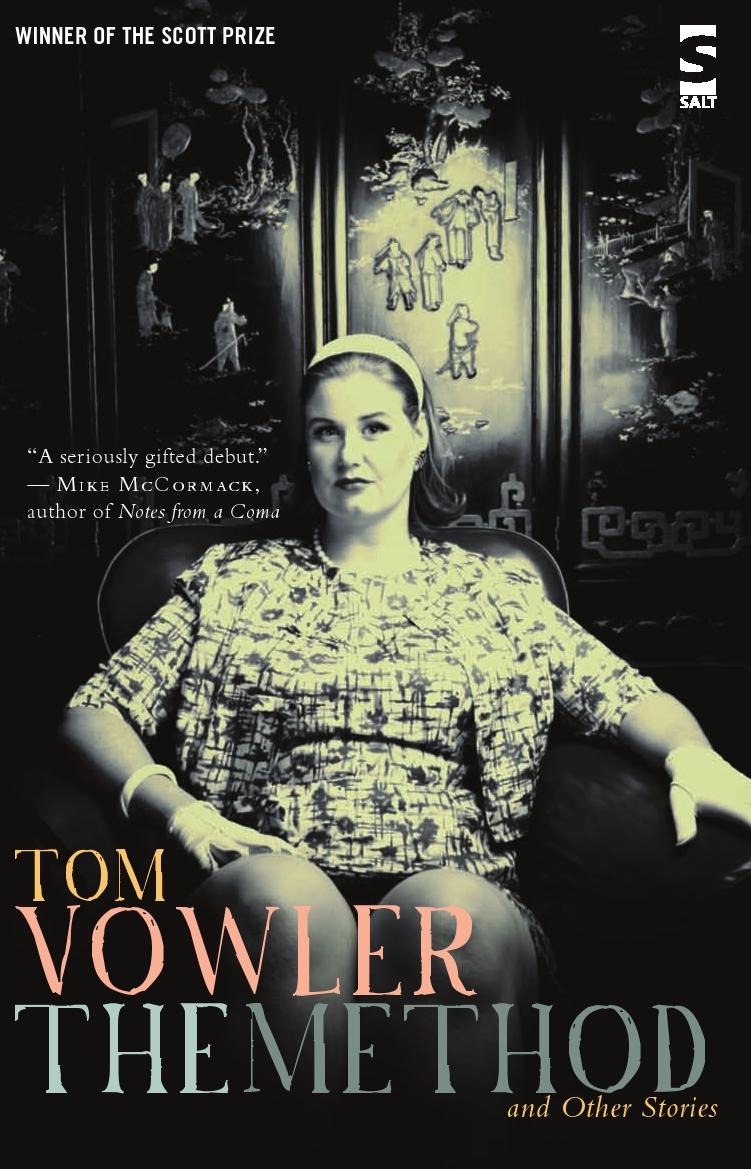
Tom is the author of the excellent and Scott-prize-winning collection The Method and Other Stories, published by Salt in 2010, and the forthcoming novel, All that Binds Us, which is a dark psychological thriller set on Dartmoor. On the subject of locations, I thought I'd first ask Tom the questions I've asked all those who've taken part in my Writing & Place series. And then we have a chat about his short story collections.Enjoy!

Tania: Where are you?

Tom: A stannary town on the edge of Dartmoor, in south-west England.


Tania: How long have you been there?

Tom: Just over a year, having been a decade in Plymouth.


Tania: What do you write?

Tom: Literary fiction, I suppose, though my agent has just described my novel as a psychological thriller. Short stories too.


Tania: How do you think where you are affects what you write about and how you write?

Tom: I actually moved here in order to finish my novel, which is set in the uplands of the moor. Visiting once a week didn't allow me to immerse myself fully in the landscape, which, for me, is one of the main 'characters' of the book. Research became a delight, learning about Dartmoor's history, its people, the flora and fauna. Watching the changing seasons, writing scenes where they occur, has given me a profound affection for the region, one I hope has permeated my fiction. Scenes in the moor's pubs were meticulously researched. :)

Tania: Yes, Tom, I have no doubt about that! Ok, onto The Method and Other Stories. Having just re-read the title story, it made me think of a question for you. I recently commented on a friend's blog post about the old chestnut, "writing what you know" and I said Well, while I believe in making things up, it's hard to write what you don't know, and perhaps writing and knowing are actually unconnected. What's your take, given that you the main character in your story goes to the most extreme lengths to get to know the main character in his novel...and you have actually moved house in order to better research yours?

"My own approach to research had never been this committed; if I wanted to write about something, I’d read about it. I’d Google the hell out of it and then use my imagination to make notes and diagrams, charts with lines linking characters, the complex worlds they occupied, their beliefs, histories, idiosyncrasies, what I thought they ate, how they voted. I’d construct their lives, give them voices, breathe life into them. I thought that was enough. But then, at a meeting with my publisher, the issue of authenticity arose." (From The Method)"


Tom:  I had some fun with that story, although it’s worrying how many people think it’s autobiographical in some way. It’s largely tongue-in-cheek, but does throw up questions on research and its thoroughness. The inspiration came from reading about the extent an actor had gone to for a part in search of authenticity, something we as writers also strive for.

Writing what you know is well and good, but would soon make for stolid fiction; you’ll quickly run out of subject matter, emotional experiences, anecdotes. And so we must venture into unfamiliar worlds, whether literally or vicariously, in order to assimilate the themes and people we’re writing about. Annie Proulx is a good example, someone who totally immerses herself in a community during composition, giving her a sense of dialect, of customs, the minutiae of a culture.

And, yes, moving house to be near the setting of my novel was a big commitment, but meant I could actually write scenes where they took place, or an hour after visiting them. The alternative was to go there only fortnightly and read about the place in between, which is always going to give you a second-hand account. I now have a profound love for the wilderness I’ve spent two years writing (among) and about.

But research isn’t always so edifying. The same book involved studying the darker aspects of human behaviour and I was glad not to do this first-hand.

Tania: I just noticed, rereading the excellent Seeing Anyone, the scientific imagery, "the earth's curvature", "like a distant star", "the Doppler effect", "a shape hidden within an optical illusion" . Does this reflect what you were reading at the time? Tell us more!

Tom: Good question – the scientist in you coming out! There was nothing overtly contrived in this, but I do have a wholly amateur curiosity in astronomy and physics (until their enormity and scope overwhelm me), and it’s likely some influence occurred there. On a conscious level, I suppose we search for the language, the imagery, to best describe a feeling or behaviour, and this works best for me if the simile or metaphor is somehow juxtaposed with its partner. And so with this rather elegiac story (and indeed with Staring at the Sun), I used aspects of the physical, scientific world to flank the most abstract, metaphysical of matters: love.


Thank you so much, Tom. You finish your tea (or G&T... or beer) while I tell the folks, whose appetites have surely been whetted, that they can purchase your book directly from Salt, or from Amazon or the excellent Book Depository and read the recent review by Melissa Lee-Houghton on The Short Review.  That's all for today, dusk is falling over the shed. Pictures soon, I promise!

Tuesday, February 22, 2011

Quick shout out

I had a wonderful time last week at the launch of my great friend Sue Guiney's poetry collection, Her Life Collected. There were several highlights to the event at the Lumen United Reform Church and Community Centre - the first being hearing Sue read a number of poems from the book, some very funny indeed, since she had decided to stay away from the "divorce, death and doom" poems for the night! The second thing that made it a very special event was finally meeting up with our blog friend Lauri Kubuitsile, her of the Thoughts from Botswana blog. Sue, Lauri and I had conducted a three-way blog chat about writing over the past few months, and meeting Lauri was just like carrying that chat over from the blogsphere into real life! And continue it the next day wandering around London (well really from one cafe to another one a few steps down the road...)

The third interesting aspect of Sue's launch was that it was also an open mic night, which the Lumen centre holds regularly, and I decided to take the plunge and read one of my poems for the first time. I'm quite used to reading my stories, although that was extremely scary the first few times. But poetry? With line breaks? Ok, it's a 6-line poem  - which will be published in Alba shortly, otherwise I would never have had the guts to presume to read amongst the poets. But I was really worried I'd screw up the line breaks somehow, I'd read it all wrong, even though I wrote it. Mad, eh?

Well, it went fine. Six lines, it was all over pretty quickly! And I was glad to have done it. Lauri also read, as did Sarah Salway, so short story writers were well-represented. I still wouldn't call myself a poet, but one day, maybe...

Talking about Sarah, who I had a lovely time with in London, chatting about the upcoming Arvon short story course we will be teaching in May....She and I - together with fabulous writers Elizabeth Baines, Susannah Rickards and Catherine Smith - are reading at Jay Merill's Salt Publishing short fiction event at the Wise Words festival in Spitalfields, London, on March 16th. See Sarah's blog for the info.

Sunday, February 20, 2011

2011 Sunday Times EFG longlist is out!

The longlist for the £20,000 Sunday Times EFG Private Bank Short Story Award - the richest prize for a single story (although only open to published writers) - has just been announced. An interesting list, it seems on first glance to be that there are more Big Names on it this year, maybe the Big Names realised that this is a serious amount of money and it would be foolish not to go in for it! Delighted to see Short Review authors Rob Shearman and Clare Wigfall there, along with Kevin Barry and Yiyun Li. Here's the full longlist:
  • Fabian Acker 'Nirvana'
  • Kevin Barry 'Fjord of Killary'
  • Meira Chand 'The Pilgrimage'
  • Will Cohu 'East West-West Coast'
  • Anthony Doerr 'The Deep'
  • Michel Faber 'In the Woods with a Dead Dog'
  • Roshi Fernando 'The Fluorescent Jacket'
  • Tibor Fischer 'Possibly Forty Ships'
  • Xiaolu Guo 'Life by Accident'
  • Sarah Hall 'Vuotjarvi'
  • Tobias Hill 'Not that it Matters'
  • Susan Hill 'Crystal'
  • Yiyun Li 'The Science of Flight'
  • Hilary Mantel 'Comma'
  • David Miller 'Fuck Being Happy'
  • Robert Shearman 'History Becomes You'
  • Erin Soros 'BC Almanac'
  • Louise Stern 'Black and White Dog'
  • Gerard Woodward 'The Family Whistle'
  • Claire Wigfall 'Professor Arvind'

You can read more about the longlisted authors here. I am particularly intrigued by Fabien Acker, who won "the BT award as science writer of the year", and Yiyun Li's story, because it has science in the title! Good luck to them all, the shortlist will be announced in a few weeks.

Thursday, February 17, 2011

Live Q&A tonight on Thresholds

I'm doing a live Q&A tonight on the fabulous Thresholds short story forum - do come and ask me something! Here are the details of how to join in:
I hope you will join us, tonight between 7:30 and 9:00 p.m. UK time, for our LIVE online Question and Answer session with the prize-winning writer and editor of THE SHORT REVIEW, Tania Hershman. Tips and Hints for helping the session to run smoothly: 1) Members need to be logged in to submit questions. 2) Questions are to be submitted using the Comments Box, below Tania's announcement. 3) Please submit separate questions, in separate comments boxes. 4) Use your REFRESH button occasionally throughout the session. For those unable to be with us, questions can be submitted in advance, using the Comments facility at the bottom of Tania's announcement. Further details about the event and links to some of Tania's stories can be found in the announcement on the front page of THRESHOLDS. http://blogs.chi.ac.uk/shortstoryforum/?p=3699 Hope to see you tonight!

Monday, February 14, 2011

Coming to you live from...

... my new writing shed! This is my first time in here, and although I had the most virtuous plans for it to be Internet-free, what do you know? The wifi actually gets all the way down the end of the garden! I might try and do something about that at some point, but while I am connected, i wanted to blog and say

WHOO-HOO!


So this is a bit of a Valentine's Day love post. A shed love post.

I've wanted a writing shed for years and years and years... and now, finally, I'm in it. There was a shed here when we bought this house, that was definitely one of the main attractions, but it needed to be insulated, so now it looks a little sauna-like, all pale pine, floor to ceiling. (Check out these amazing sheds in the meantime.)

Right now it just has electricity and a desk in, nothing else, because we're going to decorate, so no pics for the moment. It will have a single bed because I have come to understand the creative importance of being horizontal and thinking with one's eyes shut. (And napping). And our wonderful builder, Simon, is going to build me shelves including one that will allow me to work standing up when I need to. Seems a good idea for the back.

Anyway, that will happen soonish. But...here I am already! And I can hear the birds. And I can't hear much else except my fingers banging the keyboard. Any tips from you writers-in-sheds? Are you all web-less? Should I? Really...? Yes, yes, I know.

Ok, it's a bit chilly now. I couldn't manage to carry the radiator down the garden myself, but really need to, since it's February in England. I will sign off now. From the shed. The writing shed. Wheee!

Sunday, February 13, 2011

It's Story Sunday!

A little thing I started on Twitter a few months ago, StorySunday asks anyone to tweet a link to someone else's short story that's published online. It's basically for me to get new recommendations of stories... and if anyone else happens to enjoy it, then that's great! Anyway, here's my #storysunday widget, you can click on the links even if you're not on Twitter...

Thursday, February 10, 2011

Best British Short Stories 2012 Wants To Hear From You!

I mentioned a while ago that Best British Short Stories is back, resurrected by my publisher, Salt Publishing, and edited by Nicholas Royle. He has just finalised the list of stories for the first edition, the 2011 edition, which will be published in April 2011 (see the list here - I'm delighted that it includes No Angel by Bernie McGill, which I chose as 2nd prize winner in the Sean O'Faolain competition), quite a mammoth task, he is to be applauded! And now he wants to know what British short story writers are up to this year.

Similar to the Best American Short Stories model, Royle will be reading stories that have already been published between Jan and Dec 2011. He told me he wants short stories published "anywhere, could be in American publications or wherever. And not just literary mags – anthologies, newspapers, online etc." But before you get excited and start firing off your beautiful publications to him, he cautions: "People need to be selective, ie not like I was when sending to Giles Gordon & David Hughes for Best Short Stories, way back." If all of us bombard him with everything we have published this year, he will be swamped. So wait, think about it, be choosy. And check out the anthologies Nicholas has already edited (to start with, read The Short Review's review of '68: New Stories from Children of the Revolution).

And then, when you're ready, send them to:
n.royle@mmu.ac.uk or hard copies to Nicholas Royle at Manchester Writing School, Geoffrey Manton Building, MMU, Rosamond St West, Manchester M15 6LL
Good luck!

Addendum: As the lovely and generous Rachel Fenton pointed out in the comments, you could also recommend someone else's story!

Thursday, February 03, 2011

Jo Cannon's Far-from-insignificant Short Story Collection

It's a fantastic thing when a friend whose writing you greatly admire has a book published! Jo Cannon's first short story collection, Insignificant Gestures (Pewter Rose Press, 2010) is one of those short story collections that provoked in me a physical reaction. I gasped as I finished a story, I had to put the book aside, I felt something in me was roiling and unsettled by Jo's powerful stories. It's hard these days after reviewing so many collections for me to find unique adjectives to describe what stories do to me, but I find Jo does something quite different in her writing, somehow a melding together of experiences as a GP and travels in Africa. The results, which are sometimes quite odd and surreal, are stories with characters you can't shake once you've finished the story, situations which are both deeply affecting and also, in small ways, hopeful.

I'm delighted to be hosting Jo as part of her Virtual Book Tour! We had a chat about writing. Here's what she told me:

Tania: When did you first know/decide you wanted to be a writer?

Jo: I don’t really see myself as a writer, Tania! But in primary school, long before I wanted to be a doctor, my ambition was to be an author. Failing this, I would be a show jumper – the horse, not the rider. The time came when I accepted I would never swish my tail in a show ring. But I didn’t relinquish the hope that one day I would write a book. I wrote numerous novels in those days, in exercise books with the top half of the page devoted to illustrations in felt pen. Mostly twaddle about running away with gypsies or ponies, or both. I didn’t start writing stories again until my mid forties. I needed time to collect better material.
  
T: Why short stories? What does the short story do for you, as a reader and as a writer? 

J: The short story seems to be the genre that comes naturally to me. I made a couple of attempts at novels, but they were sewn up after 3,000 words. Time is an issue, of course. My writing tends to be intense and sporadic, so Insignificant Gestures took five years to write. Had I embarked on a novel I would have literally lost the plot. But I also think my job has pushed me into short stories. Every surgery feels like a collection.

T: What does the word "story" mean to you?

J: At the simplest level a story is a tale made up to entertain others. Ideally a short story should be intense and complete. It must be authentic, so that the reader understands how it feels to be someone else. The language should add meaning, for example, through metaphor. I admire this in other writers, but still have a long way to go!


T:  How does a story come to you? Stories come to writers in many different ways: an image, a first line, a voice. What's yours?

J: Usually it is an emotion. Either one I have experienced, or that someone, telling their story, has transferred to me. Sometimes the heart of a story is a powerful, often troubling memory – not always my own - which I exorcise, and give meaning, by turning into fiction. Other stories begin with a dreamy "What if?" For example, sitting in a traffic jam and considering what would happen if I never got out.

T:  How long did it take to write all the stories in this collection, and how did you decide what order to put them in?

J: The collection contains about two thirds of my work. Some earlier stories seem clumsy now, and I discarded them. When I considered that they might have a wider readership, some seemed too exposing of real people’s lives, or my own. My publisher rejected a few, chose which story to go first, and also decided on the collection’s title. I tried not to have too many first person narratives together, and followed sad stories with upbeat ones. I separated linked stories, but not too far, hoping the reader might be surprised to recognise the character from a previous incarnation. Eve appears at different ages and her stories are in chronological order, scattered through the collection, ending with her death. The book ends with Jam, which is a metaphor for Eve’s life, and life in general.

T: How does it feel knowing people are reading your book?!

J: I’m over-awed! And thrilled, of course. The book has already sold more than I, or my publisher, expected. I’m aware that a reader has expended a few hours of his or her life, and some hard earned dosh, on my book and I sincerely hope they feel it was worth it.

T: What are you working on now?

J: My ‘other’ job is really busy just now, so writing time is limited. And book promotion activities – like writing blog interviews! – are surprisingly time consuming. I feel the collection should get my best boot out into the world. But when all this settles down, I hope to get back to writing short stories again. I’ve learned so much in the last five years, I’m excited to think where the next five will take me.


Thank you so much, Jo, for those insights. We're exciting about where the next five years take you too! Find out more about the book and Jo's stories on her website, Jo Cannon.


Coming soon... blog interviews with Tom Vowler about his short story collection, The Method, and Andrew Oldham on his poetry collection, Lapwing.

Monday, January 31, 2011

First acceptance of 2011

I had one day in December when I got 4 rejections in 24 hours. That wasn't much fun. I can handle them one by one, but that was a bit like being whacked... and then whacked again, and again! Well, 2011 is off to a better start with the first acceptance, sneaking in just before January ended: my poem, Moss, will be published in the next issue of Alba: A Journal of Short Poetry. So, my 5th published poem, what does this mean?

I've been reading the excellent Rose Metal Press Field Guide to Prose Poetry and feeling very inspired about poems that look a little like prose but aren't. Then J and I went to the TS Eliot prize shortlistees reading and I was blown away by Simon Armitage's odd and darkly humourous pieces from Seeing Stars, and Sam Willett's poems from New Light for the Old Dark (neither of whom, sadly, won). And then I bought Jo Shapcott's Costa-winning collection, Of Mutability, which is astonishing, and which suddenly taught me something about line breaks, the power of the word chosen to end a line, the word chosen to begin the next. Wow.

So I am being beautifully bombarded (by choice) on all sides by poetry, perhaps it's no surprise when sometimes that's what comes out when I write. I am remembering that as a kid it was always easy for me to makes up rhymes to impress classmates (it was the only thing I did that did impress them - my maths skills weren't really very cool). Maybe I am tapping into something that was always there? Whatever it is, I am enjoying playing around with other forms, all other forms. I am going on an Arvon Foundation course in Writing for Radio in the summer - another form that really appeals to me - and one of the tutors is Simon Armitage, so I am very excited about that! The other is Sue Roberts, executive producer for BBC Radio Drama in the North, I am really looking forward to meeting her too.

And on that note - yes, the wonderful Sarah Salway and I are teaching an Arvon Foundation course on the short story in May, and booking is now open! We'd love to meet you...!

Wednesday, January 26, 2011

Thought lab life was dull and boring? Think again!

One of the scientists at the lab I am writer-in-residence in sent this around yesterday and I think it's wonderful! It's for all of you who think science is about hard fact, about right and wrong, about automatons in lab coats who reveal the truth of existence on a daily basis. Umm, no, not quite...

Thursday, January 20, 2011

Upcoming deadlines

It's been a while since I did one of my "writers' service announcement" blog posts with some upcoming deadlines, and I am feeling pretty congested today and not up to anything more thoughtful, so here are some places to send your very talented short stories (and the odd poem). Good luck!

Hippocrates Prize for Poetry and Medicine contest deadline Jan 31st.
£5000  1st prize , £1000  2nd prize, £ 500  3rd prize, 20 commended entries £50. "‘Medical’ is to be interpreted in the widest sense, including the nature of the body, and anatomy; the history, evolution, current and future state of medical science; the nature and experience of tests; the experience of doctors, nurses and other staff in hospitals and in the community; the experience of patients, families, friends and carers in these situations; the experiences of acute and long-term illness and dying, of birth, of cure and convalescence; the patient journey; the nature and experience of treatment with herbs, chemicals and devices used in medicine". Entry maximum of 50 lines not including title or blank lines. Entry fee £6, entry online or by post. Open to all. 

Orlando Prize contest deadline Jan 31st. (women only)
poetry (90 lines), creative non-fiction (4000words), short fiction (4000 words) & Flash fiction(1000 words). £1000 1st prize in each category .Entry fee $15. Women only. Online entry only. 

Readers' Digest 100 Word Story competition deadline Jan 31st
£5000 1st prize in each category. Entries should be an original, previously unpublished story of exactly 100 words (excluding title). There is no limit to the number of entries you can make. No entry fee. Online entry only. 

Lumen/Camden Poetry Competition deadline  feb 14th
£5000 1st prize in each category Poems up to 40 lines. £2.50 per poem, 6 poems £10. Poetry must not be previously published. Judge: Carol Ann Duffy, Poet Laureate. Proceeds to the Cold Weather Shelter. Pamphlet publication collection of winner's poems - 50 free copies plus a reading. 

Binnacle Ultra-Short Story deadline Feb 15th
"We are looking for prose works of 150 words or fewer and poetry of sixteen lines or fewer and fewer than 150 words. All works should have a narrative element to them.  Please include the work in the body of the email message, if possible. A minimum of $300 in cash prizes will be awarded, with a minimum prize of $50.  Please submit no more than two works total, prose and/or poetry." No entry fee. Online entry only. 

Vestal Review Ten Years in Flash Fiction contest deadline Feb 28th (extended)
£100  1st prize, 2nd prize £ 50. Guest judge Steve Almond will award the first prize of $100, the second prize of $50, and the third prize a signed copy of Mark Budman's novel “My Life at First Try” [I interviewed mark about his fabulous "novel-in-flash" here] and publication in Vestal Review. Results will be announced at Vestal Review website on or about March 1, 2011.Entry fee $4. Open to all. Online entry only.  

Redivider Journal First Annual Fiction Contest deadline March 1st
1st prize: $1000 +publication; 2nd prize: $250; 3rd prize: $100. Max word count 8000. Entry fee is $15 and includes a one year subscription to Redivider. Open to all. Online or postal entry.  

Fish Publishing One Page Story Prize deadline March 20th
1st prize:  €1000 +publication; 9 runners up published in anthology. Max word count 300.Entry fee is €14 online or  €16 postal entry. Open to all

Bristol Short Story Prize deadline March 31st [I am one of the judges] 
PRIZE MONEY HAS DOUBLED THIS YEAR! 1st prize: £1000 +£150 Waterstone's Gift Card: 2nd prize: £700 + £100 Waterstone's Gift Card; 3rd prize: £ 400 + £100 Waterstone's Gift Card; 17 finalists £100. Max word count 3000, no minimum. Entry fee £7. Open to all. Online or postal entry.  

The Collagist 2011 Chapbook Contest deadline April 15th
1st prize: publication by Dzanc Books, plus $250 and 25 author copies; 2 Honorable mentions, possible publication. Entries will be accepted in all genres, including short stories, flash fiction, novellas, poetry, and non-fiction. Manuscripts for all genres should be between 35 and 80 pages in length. Previously-published excerpts or individual pieces are acceptable as part of your entry, but the manuscript as a whole must be unpublished. Entry fees: $15:; $20: Includes contest entry fee plus a copy of the winning chapbook (only available to U.S. entrants) Includes contest entry fee only. Open to all except relatives, close friends, and former students of the judge, Matt Bell.

Addendum: A few more!
Treehouse Press Three-in-One Chapbook Contest deadline March 15th

First, second and third prize winners will each be published in a chapbook by Treehouse Press in September 2011. Winners will receive £100, £75 and £50 respectively, as well as 20 copies of their chapbook. Each entry must contain 3 short stories by the same author (between 10,000 and 15,000 words in total). Winning entries will each have their own chapbook published. Stories can be in any genre. We welcome experimental work, cross−genre work, work that combines text and image, graphic short stories (ie. comics). Treehouse Press will not select winning entries based on race, sex, gender identity, sexuality, religion, age, nationality, physical ability, or geographic location. Quality of work is what we're looking for, as well as work that reflect our ethos.. Entry fees: £10/$15. Open to all.


Short FICTION's short story competition, deadline is 30th April
First prize £500. Word limit is 6,000. Judge: Gerard Donovan. Here's the link. Open to writers at any stage of their career, so ones with books out too. Entry fee: 2 stories for £10, which includes copy of the journal's next issue (which costs £10).

Sunday, January 16, 2011

New Rules for Writers

Thanks to Twitter, I came across this thought-provoking article by Anis Shivani called
"New Rules For Writers: Ignore Publicity, Shun Crowds, Refuse Recognition And More". This is what he has the fabulous temerity to suggest: on the Huffington Post,
These "rules" totally go against every prescription for writing success you'll hear as a young writer from all quarters: the conformity-driven MFA system, the publishing industry's hype-machine, successful writers who act either like prima donnas or untouchable mystics, the marketing experts who seek to impose advertising rules on the writing product. Overpaid editors, illiterate agents, arrogant gatekeepers, and stupid reviewers want you to bargain away your soul for a pittance -- the bids in the market escalate downward, a reverse auction where you compete with the lowest of the low to be acknowledged as an entity that counts.
Why take part in the game at all? Who has ever come out of it alive, able to set up tent and build followers on the other side? Why not accept the reality that writers aren't forged in social harmony and peer input and obedient fellowship, but in a region where madmen and insomniacs find no comfort? To get you started on a regimen designed to pull you away from the mother-teat of the writing industry, here are the ten commandments:
His 10 Commandments include such words of wisdom (and I really mean that) as: "Disobey the System. The system--from the MFA program to that fat-ass editor sitting in glorious judgment over your manuscript--will never reward originality. So fuck it!...Once you're on everyone's shit list, then your mind will open up--visions you never thought possible, leaps of imagination, idle curiosity revving up into high gear--knowing that no one will ever be pleased by anything you write" and "Seek Unemployment.... Find ways to be unemployed, doing nothing, finding enough time on your hands, after you've met your basic needs, to wander into unknown realms of thought and imagination."

These really are excellent "rules", I'm tempted to print them out and stick 'em above my desk. I do take issue with his one rule about only reading dead writers ("Treat every contemporary with dire suspicion, until they stand they test of time--and most of them won't, you'll see. Read no one living with attention and gratitude, unless they've proven themselves in relation to your eternal touchstones.") That seems a little much. And we'll turn a blind eye to Mr Shivani's website, which is an excellent example of the evil publicity he is cautioning writers against indulging in!

But there's a lot of common sense in here. I will leave you with: 
Don't Pursue a Niche. You're told, in every dimension of life, find a niche, find your own little corner, and become really good at it. Find that unique voice of yours, stemming from your involuntary pain and pleasure, find it and hold on to it and dispense it with greater and greater intensity until the end of your writing life. Don't do it. Be all over the place. The only way to expand the boundaries of your art is if you recognize no specialties. Try your hand at things you're sure you'll fail at. Find the most ludicrous, nonsensical, absurd ventures to spend/waste your time at, and you'll discover unforeseeable payoffs. 
Yes. I like that. Read the whole article here.

Friday, January 14, 2011

Lit mags in the UK & ireland

For those who are new to this blog, I just wanted to let you know that I have just updated my Ever-Growing List of Uk & Ireland Literary Magazines that published short stories... we're up to 117 now, although a few have shut down since I began keeping the list. If you go to the blog post, you can download a PDF of the updated list too. And see the Addendum - good news, the Best of British Short Stories has been resurrected by my publisher, Salt, and Nicholas Royle is at the moment compiling the stories, the book will be published in April!

Wednesday, January 12, 2011

The Perfect Egg in Nature

I'm delighted to have a short story in the Futures section of the venerable science magazine Nature this week - it's just gone online today and is in the print issue which I believe comes out tomorrow. It's called The Perfect Egg,  and it was sort of my first real attempt to write science fiction. Yes, some of the short stories in my book might be kind of SF-ish, but that wasn't my aim when I was writing them. Nature Futures is "a forum for the best new science-fiction writing, exploring some of the themes that might challenge us as the future unfold" and I never expected to get my first submission to them accepted. This story seems a bit different from the other Futures stories I have read, so I am delighted to have made it - and rather thrilled that in their email to me they addressed me as "Dr Hershman"! (Don't worry, I put them straight on that...) Anyway, comments can be left on the online version, should you feel moved to! (No pressure). Read it here.

Tuesday, January 04, 2011

Eureka moments turned into fiction

So, my first publication of 2011! Comma Press are doing something very close to my heart: commissioning fiction writers to be inspired by "eureka" moments in science across various disciplines, pairing them up with a scientist, and asking them produce short stories that explore this concept which will be published in an anthology in May.

Being commissioned is both wonderful and fairly scary. First, there was quite a detailed brief for this project. And second, it had to be a minimum of 2500 words. For someone like me who hasn't written anything over 1500 for 3 years, that was like asking me to write a novel (ok, not quite, but fairly daunting!)

 Transgenic tadpoles expressing Green Fluorescent Protein

Well, I managed it by approaching it as a set of short short fictions, and got to 2500, just... And the result, We Are All Made of Protein but Some Of Us Glow More Than Others, is inspired by the discovery of Green Fluorescent Protein (GFP), which has transformed molecular biology, as I have learned well from the biochemistry lab I am writer-in-residence in and from Nicholas Love, the researcher in the Amaya Lab at Manchester University that I was paired with. GFP allows a researcher to see inside a living organism in real time. It's amazing, as the pic above from his lab shows...

You can read my story here and Nicholas' afterword here. And there are more stories on the Comma site, for physics, chemistry and neuroscience, written by, among others, Annie Clarkson, Stella Duffy and Kate Clanchy. This is very exciting, I'm delighted to be involved...!

Wednesday, December 29, 2010

Two videos

First, another piece of video art by the talented Richard O'Callaghan (watch his video inspired by The White Road), this time inspired both by my story I am a Camera (which you can read here) and by Fellini's La Dolce Vita! Who would have thought...


And this, via Sarah Salway, which is wonderful, Kurt Vonnegut's advice on writing great short stories...

Monday, December 27, 2010

Retreating, and bringing it back home

I have been meaning to write about my retreat experience for a while but other blog posts got in the way. Well, I have been thinking about it a lot, as well as those new year's resolutions again, because those 10 days at Anam Cara at the beginning of the month were the closest I have come to bliss in a long, long time. On previous occasions at AC, I have received majorly good news - Salt offered me the book deal there in 2007, I won the Binnacle Ultra Short Comp in 2009 - but those have tended to be somewhat of a distraction from The Work. And the reason I went - with my two great friends, Vanessa Gebbie  (who had just received her own amazing news) and Sue Guiney, was to work. To write. 

It felt like I hadn't done any "proper" writing for months and months. Or perhaps years. I've been reading Paris Review interviews (the latest with Jonathon Franzen and Louise Erdrich), and both were talking about how important it is to have your next project in the works when a book comes out. And I've talked here before about how I most certainly did not have that. I had no clue. I hadn't believed that my book would actually be published, it was utterly unreal, and I had spent the 15 months from book deal to publication mostly holding my breath. I couldn't get down to anything that required concentration - so i set up The Short Review as a distraction. (Ah yes, beware of those "small" distractions!)

That was when I started really devoting myself to flash fiction - it was and is a sort of "instant gratification" for me in terms of the process. It's heady, addictive, for me it happens in one "splurge", on sitting, with some tinkering afterwards but not the same kind of revising that goes on with a longer story, the kind of story you carry around with you in your head for weeks and months. I didn't have that head space, it was filled with ecstatic anxiety!

And then, when the book came out, was that when life got back to normal? Yeah, right. More things to fill your head, namely the question "How can I get people to read it?", which whirls around and around...

So, basically, to cut this very long story short, we three had planned this retreat in August and I was desperate for December to come because, 2 years after publication, I have my Arts Council grant for the Next Book (or Project, as I prefer to think of it in order to psychologically fool myself) but hardly any time or head space to write it. I've been so incredibly lucky over the past 15 months since we moved to England, I have had wonderful invitations to read, meet with book groups, teach workshops, around the country. But for me, if I know on a Sunday that the week coming up includes some kind of event, I feel like I can't relax, can't settle down into my writing. It's mad, I need to get over that. But first, I needed that 10 days to get myself on track.

And get myself on track it did. I was worried - always worried, see?? - that I wouldn't be able to get down to work. I had a commissioned story to write (for Comma Press's exciting anthology of fiction inspired by scientific breakthroughs) which I hadn't been able to physically write due to hand pain. What if that took the whole 10 days? Okay, not the worst thing. But I wanted to do more. 

Let's just say that it couldn't have gone better. The story for Comma, which had been causing me anxiety because it had to be a minimum of 2500 words and the longest story I've written since 2007 is 1500, had been spinning in my head for so many weeks that it all came out. (I had to write it in short flash-like sections and then actually printed it out, cut them up and rearranged them by hand, which was fun and so tactile). First, I was relieved since I was on deadline. Second, I learned I could write something over 2500 words (about one word over...). Third, it was done by day 2, so I had 8 more days to do more!

And do more I did. This involved all sorts of writing related things, from transcribing stories and beginnings of stories from my notebooks to the computer to adapting a flash story into a poem for a poetry competition (thanks, Sue!), and reviewing a fabulous short story collection for The Short Review.  And, much to my astonishment, it resulted in my starting to write something so far out of my usual "comfort zone" that I don't know what to call it! It seemed to be a result of reading 5 books by Fred Vargas in as many weeks. I don't normally read crime thrillers, but was intrigued by Sarah's blog post in October. So I got one book out of the library. And was delighted. So I got another... and another... These books are not just well-written, but they are funny and quirky, no-one says the predictable thing. They are steeped in Frenchness, which is lovely for a Francophile like me, and they are not really about the whodunnit but about the characters, who are singular and fascinating. 

What really inspired me was the humour but also the way Vargas (who is female) uses an omniscient narrator who moves from one character's head to another, often on the same page, and how well this works. I had always thought this would impede flow, I don't think I'd seen it done well before.

Whatever it was, something was released in me, and I have started "something" which is now 3000 words and not yet finished, and dips into the heads of at least 5 characters. And more importantly, it makes me laugh as I write! I have no idea what might happen, if it's some sort of crime thing, but right now I don't care. I occasionally write short stories that make me smile but more often than not they disturb me and sometimes upset me, so this is the most wonderful contrast.

Fear not, I am still writing short stories, working on my Arts-Council-funded project inspired by the biochem lab I am in and the 100-year-old biomathematics text book. The retreat helped me figure out what I have already done and where I might be going. I just really hope I can hold onto even 10% of the feeling I had there - with nowhere I had to be, nothing I had to do, not even make meals or feed the cats or even talk to anyone during the day - then I might be able to keep this up. I have my new study set up in our new house  while we consider options for my writing shed (when the freeze is over) and in it I have a single bed donated by a friend (thanks, Alison!) because I learned at Anam Cara how important it is to have a horizontal option in my writing space. I get all my best ideas at night, in bed, so why not try and simulate that at other times?

I am, once again, as I did last year, I am trying to cut down on online distractions. I have a note stuck up on the wall above my desk with a list of things I musn't do ("check Amazon rankings", "check website and blog stats")... and so far, today, I haven't done any of them. It's a start. Yes, I've played online Scrabble, but I still stick to my conviction that that does actually help the writing. Time will tell!

Anyway, Happy New Year of Writing to you all, I look forward to hearing great news from all of you, dear blog readers, thanks for being here, whether I know you're here or not. Feel free to say hello!

Wednesday, December 22, 2010

Sean O'Faolain Winner and Finalists in New Issue of Southword


For your holiday reading pleasure, the new issue of Southword journal has just been published with the winner and finalists of the Sean O'Faolain short story contest which I was honoured to judge this year. (See the final results here). The winning story is Eddie by Nikita Neilin and in 2nd place, No Angel by Bernie McGill. I hope you enjoy them, and the four runners-up, as much as I did!

Tuesday, December 21, 2010

National Short Story Day in the UK

I think you know how I feel about short stories... so no need for another post here in honour of National Short Story Day today, (21st December is the shortest day of the year) - extolling their virtues! Instead, I direct you to the brand new issue of The Short Review for ten collections to start with, and to the Short Review blog, where there's a lovely widget showing you all the @shortstoryday activity on Twitter, recommendations of stories etc..., freely available even to those of you who haven't discovered the joys of twitter.

Happy National Short Story Day! Find out more about the day here.

Saturday, December 18, 2010

Wellcome collection guest blog

I am planning a longer blog post about my retreat experience, which was heavenly, but for the moment, a few links:


Part 2 of my guest blog post on science-inspired fiction is now up on the Wellcome Collection blog, (part 1 is here). If you don't know the Wellcome Collection, it is a brilliant place in London, a "free visitor destination for the incurably curious, exploring the connections between medicine, life and art in the past, present and future." My guest blog is about examples of "SciLit" that I like, what works for me and what doesn't. A taster:

The first fiction inspired by science that I came across, and still my favourite, is Einstein’s Dreams, by MIT physicist Alan Lightman. Published in 1994, this could be described loosely as a novel-in-stories, an imagining of what Einstein might have been dreaming about as he was formulating his theory of relativity. Each chapter or story conjures up a different theory of time – it moves slower at higher altitudes, disorder decreases with time instead of increasing, it works in a groundhog-day fashion where people are doomed to repeat the same day again and again. Einstein’s Dreams is not only thought-provoking but beautifully written...
Read the rest here.

Huge congratulations to my friend Sarah Hilary who has acquired a top-notch agent! Read her very insightful blog post on how to get an agent... or not. Really good advice, especially about perseverance and accepting critique. Heed it well.

More soon...!

Thursday, December 16, 2010

Menage a Trois: Part 1

It's wonderful having friends who are writers, sharing experiences, celebrating the good things and commiserating about the hard times. So first, some celebration: I am delighted that my great friend Vanessa Gebbie's first novel, The Coward's Tale, will be published by that venerable publishing house Bloomsbury, in the UK and the US, with hardback coming out in Nov 2011! Thrilling news and inspiring for all of us, it is a beautiful, poetic book, it's fantastic that a major publisher sees its potential for capturing a great readership. Congratulations!


Now, what is the title of this blog all about? Not just there to catch your eye... I have two writer friends, Sue Guiney - whose most recent novel, Clash of Innocents, was published in November - and Lauri Kubuitsile - Botswana-based author of 13 books - who are very prolific, writing all sorts of things, and a few months ago I thought I'd ask them how they did it. The 3-way conversation was fascinating, it went on and on... So we thought we'd split it in three parts and host a third each on our blogs, all on the same day - and also as part of Sue's virtual book tour. Hence: menage-a-trois. Right? Before I launch into my first third, here are their bios:

Sue Guiney: I'm a writer of fiction, poetry, plays. I'm a teacher of fiction, poetry, plays. Born and raised in New York, I've made my life in London with my husband and two sons.

Lauri Kubuitsile: I have 13 published books, including three books from my Kate Gomolemo Detective series. My children's book Mmele and the Magic Bones (Pentagon 2008) was shortlisted for the African Writers Prize (UK) and has since been chosen as a set book for all primary schools in Botswana.My short stories have won numerous prizes.In 2005, I was among three writers shortlisted for our national, biannual prize for creative writing the Orange/Botswerere Prize. In 2007, I took first position for the same prize.


And here's what we talked about. There'll be a link to Part 2, on Lauri's blog, at the bottom:

Tania: Hi Sue and Lauri. Tell us everything - everything - that you write!

Sue:
Thanks so much for asking me to take part in this, Tania. So to begin, some may say my writing is all over the place:
Poetry
Novels
Short stories
Plays
Magazine articles
My blog (of course)
Endless emails
Lauri
Good morning Ladies,
Oh my- this might be a bit of an embarrassment showing explicitly what a writing whore I am but here goes:

Adult short stories
Short stories for kids
Detective novellas
Romance novellas
Adult novels
Children’s books
Magazine articles
Newspaper articles-primarily science and health
Newspaper column on writing books and publishing (this is new)
Radio educational programmes (science, maths and English for primary)
TV scripts- drama series for private production company and HIV/AIDS NGO
Science textbooks for primary and junior secondary school
English textbooks junior secondary
Blog

I think that’s it.
Tania: Wow! I had no idea that you were both so amazingly prolific. Ok next question, feel free to take your time with this:

2) How do you know what you're going to write before you start? Is it a conscious decision or not? Is it for some forms and not others?

Lauri: 
Hi Guys. This is fun. I think I may be different from Sue as I must make a living from my writing, I must have a monthly income of a certain amount from writing. My husband is a government school headmaster (translated as low paying) and we have two kids. I need to work. I don’t want to take a day job. I want to earn my share from my writing. I know it is politically incorrect to say that I write to earn a living, but that’s it. Keeping it real- as it is.

I have two adult novels I wrote with no market in mind- I just wrote them- they sit unpublished and will likely remain there unless I break out and then conveniently die. From that experience, I know I don’t like writing that doesn’t get published. I view it as a failure (normally) or as a lesson when I’m being kind hearted.

So having said that, I always know where I’m going when I start. I don’t always know which publisher I will send to, or contest, or magazine but I know if I am writing a romance or an adult novel or a children’s book; I know if it will be genre or literary. I am an anal Capricorn – I plan most everything in my life, and after those first two ‘organic’ novels I decided I was going against my innate nature to do otherwise with my writing. Occasionally I will tweak something afterward to have it more streamlined for a particular mag or publisher that I eventually choose. I usually start with an idea that stews in my mind until it gets the right amount of ‘tension’ behind it, but when I get to work at the computer,  I know already what I am writing.
Sue:
Hi Guys.  I’m back!
First, I want to say that I  think Lauri is amazing to be able to reliably have a monthly income from her writing.  That is something I have only dreamed of...I don’t think it is “politically incorrect” at all to say that you write for a living.  It is what I aspire to.  I am very lucky in that my family does not rely on me for income.  To be honest, if that was the case I’m not sure what sort of writing I’d be doing at all.


But as far as knowing what genre a new piece will be, like Lauri, I know at the start.  An idea will come to me, and the form it will take will come along with it.  With poetry, I do tend to sit down with my “poet’s head” on and think, “ok, it’s time to write a poem. What will it be?”  But with other genres, the piece itself will dictate the form.  For example, plays will grow out of a very visual kind of imagining.  Although all my writing, including poems, seems to originate with character, in a play I imagine that character in a specific space like a restaurant or a sitting room, whereas fiction places the character first and foremost in time.  When I write a story, the time is compressed, as in a day or a few hours.  In a novel, time expands to cover a series of months or a year.  Certainly, there have been great novels that take place in just one day (ie Joyce’s Ulysses). And there have been many short stories that cover an entire lifetime.  But for me, so far at least, fiction examines how a character evolves over time and the breadth of that time period helps to dictate the form.    But to be honest, I have recently found that the more pieces I have written and the more pieces I am trying to find a home for, the more I need to think about how much time I myself have.  Do I have the time or energy to begin to write something that I know can’t possibly take me less than a year or two to finish, like a novel, or should I wait before taking on another task of that magnitude and use my time to work on shorter pieces?  For the first time in my writing life I find myself in precisely that position right now.  I presently have a novel, 2 plays, a short story and a poetry collection “out there.”  I know all of them will eventually need revising and reworking.  So I’m holding off beginning the new novel I have in mind until most of what is already out there is really finished.  So I suppose I’m saying that the more writing becomes a business for me, the more I put brakes on myself and steer myself towards one genre or another, depending on outside unrelated factors.


Yes, this is fun.  Lob us another one, Tania!

Tania: This is fun! And very interesting. Is there anything you'd like to ask each other while I am formulating my thoughts?
 .... 
...carry on reading over at Thoughts from Botswana>>>>

Tuesday, November 30, 2010

Video art of The White Road

I'm on a writing retreat here right now, but while I am away writing masses (I hope), here's a wonderful thing, an unexpected result of my book. Video artist Richard J O'Callaghan has made a piece inspired by the title story, The White Road. Here it is! I love it, I think it's just fantastic that someone was inspired to create pictures by my words. Thank you, Richard!

Wednesday, November 17, 2010

Retreats, short story events and workshops

So much to cram into one blog post! My hands are much better, partly due to Dragon NaturallySpeaking, although I don't really like talking to myself. Partly due to excellent osteopath! The nice news is that I have won a fellowship to the Hawthornden Castle Writers Retreat for next summer, am very excited. I am finding it so hard to find any time to write, I've realised I need to set up these retreats well in advance to actually get it done!

What's taking up my time? Well, The Short Review, for one - which is 3 years' old this month! No, I never would have believed it. If I'd known what it would grow into, I think I might have been too daunted to start at all. But I am so happy I did, and am very grateful to all my reviewers, past and present, all over the world, for making it happen every month.

Talking of short stories, it's National Short Story Week next week, and I've organised an event in Bristol, readings by many local writers, special guest Vanessa Gebbie, and a short open mic at the end - Wed 24th, 6-8pm, at the Blackwell's bookshop in Park Street - more details here, come along if you're in the area!

Talking about Vanessa, she's not just a wonderful writer but a great teacher too, and now you have the chance to experience that in the most wondrous setting, Anam Cara Writers' and Artists' Retreat (to which V and I and Sue are off shortly!). Here are the details, it will be a small and intimate retreat, so book your place now!


Short Fiction: So Much More Than It Seems...

Led by Vanessa Gebbie

One-week Residential Workshop Retreat

Arrival: Saturday, 28 May 2011

Departure: Saturday, 4 June 2011


A chance to explore in depth the craft of short fiction in all its challenging guises, in one of Ireland's most creatively exciting venues. A chance to focus on acquiring skills that will maximise the chances of your work rising to the top and standing out for the right reasons not only in publication slush piles but also in competitions.

In the company of a well-published, multi-prize-winning short storyist, who is also an experienced tutor, this will be a focused, collaborative workshop retreat during which you will create not only complete new work and the seeds of many new stories, but you will also discover tried and tested strategies for editing and revising your existing work to make it as good as it can be.

Although biased towards the art and craft of short fictions, we will also be able to explore the relevance of the craft issues to poetry, prose poetry and longer works.

Monday, November 08, 2010

speech recognition software and science inspired fiction

Quite amazingly, I'm dictating this blog post with Dragon NaturallySpeaking speech recognition software! Maybe I'm the last person to find this out, but this thing is bloody good! I got it four days ago,spent about 10 min training it, and it's really doing very very well. Not only can you dictate, you can also give commands to navigate around your computer. Unfortunately, this means that I can't use my laptop, which runs the LINUX operating system, so I have to use it on our Windows laptop which is just there for emergencies. I'm not a fan of Windows, I love Ubuntu, it's a brilliant operating system. Ah well, can't have it all.The oddest thing I'm finding is that I don't know what to do with my hands while I'm talking!Any (decent) suggestions welcome.Also, it's a bit hard to drink coffee and dictate at the same time!

I had a lovely time in the last few days to book launches, the ones I mentioned the end of my last blog post,Susannah Rickards' hot kitchen snow, and Vanessa Gebbie's storm warning: echoes of conflict. Great ideas for Christmas presents, if you're stuck!(sorry for the lack of links, really don't know how to do that with speech recognition.)

Just wanted to point you towards part one of a blog post I have up today on the amazing Wellcome collection blog. They asked me to write about science inspired fiction, and I wrote so much that they've split it into two parts! Part one is here: http://wellcomecollection.wordpress.com/2010/11/08/fiction-inspired-by-science-part-i/ your comments are very welcome.


Tuesday, November 02, 2010

Catching up

I haven't blogged for a while because - entirely due to my own stupidity - my repetitive strain injury has flared up again, and my right arm is very sore. So will keep this brief. Nice news: my new flash story, That Small Small Inch, is a finalist in the PANK 1001 Awesome Words contest and will be published in March. My story, Vegetable, Mineral, was a finalist last year, I feel like I'm approaching awesomeness, slowly, slowly!

Also, if you're in Bristol, come to the launch of the ShedFest Anthology tomorrow night, Wed nov 3rd, 8pm, at the Thunderbolt - this is the follow-up to the excellent ShedFest in September, the first ever literary festival in a shed! Organiser Mike Manson has compiled everything we read that night into an anthology, and £3 from every copy sold goes to the Pakistan Flood Appeal. Buy it here.

On that note, Greg McQueen's done it again: the man behind 100 Stories for Haiti has now produced 50 Stories for Pakistan, all of whose proceeds also go to the Pakistan Flood Appeal. The book features stories by Robert J. McCarter, Joanne Fox, Erik Svehaug, Susan Lanigan, Anne Mullane, Lisa Ricard Claro, R.J. Newlyn, Nuala Ní Chonchúir, Martin Webster, Jonathan Pinnock, Trevor Belshaw, Julia Bohanna, Iain Pattison, Laura Eno, Dave Clark, Pam Howes, Alun Williams, Annie Evett, Jennifer Stakes, Rebecca Emin, Marjorie Tolchard, Marit Meredith, Paul Malone, Ewan Lawrie, Jarred McGinnis, Alex Tomlin, Gail Richards, Benjamin Solah, Ruchira Mandal, Alyson Hilbourne, Ramon Collins, Darren Lee, Riaz Ali, Nasim Marie Jafry, Heather Parker, Shazia Bibi, Andrew Parrott, Brigid O’Connor, Rob Innis, Tony Williams, Annemarie Neary, Emma Newman, Robert Long, Beryl Brown, Vanessa Couchman, Joanna Campbell, Sylvia Petter, Rosemary Hayes, Paul Anderson, and Alice Turner. Get yourself a copy now.

I'm off to 2 book launches this week of two great friends: Susannah Rickards' Hot Kitchen Snow and Vanessa Gebbie's 2nd collection, Storm Warning. And greatly enjoyed two launches in the past few weeks, of Sue Guiney's Clash of Innocents and Elizabeth Baines' The Birth Machine. Nothing better than celebrating the birth of friends' books!