Showing posts with label tom vowler. Show all posts

Thursday, July 10, 2014

That Dark Remembered Day


I am delighted to welcome Tom Vowler back to the blog today, to talk about his brand new novel - his third book - That Dark Remembered Day. Tom was here last year talking about his first novel, What Lies Within, and two years before that to chat about his short story collection, The Method. He's not been sitting still much! Below, we play Word Association, with Tom answering in the voice of his main character. But first...


 Alison Moore, author of The Lighthouse, called That Dark Remembered Day "a compelling story about damage done, a touching exploration of the possibility of forgiveness and recovery" and Anthony McGowan, author of Mortal Coil, said: "Almost every page has the sort of perfect sentence or paragraph that makes you want to elbow the stranger next to you on the train, point with a stubby finger, and say: ‘Read that. Just read it.'"

Here's a quick synopsis: 

A son returns to where he grew up, where his mother still lives and where a terrible event in his childhood changed the lives of every person living there. As the story unfolds through the eyes of the son, the mother and finally the father, the reader experiences the taut build up to one day's tragic unravelling, and the shock waves that echoed through a once happy family and close-knit community. Will they ever be able to exorcise the damage of that day or do some wounds run too deep?

Tom is giving away a copy to one lucky blog reader - just leave a comment below! Here's a little bit about Tom: " Tom Vowler is a novelist and short story writer living in south west England. His debut collection, The Method, won the Scott Prize in 2010, and his novel What Lies Within received critical acclaim. He is co-editor of the literary journal Short Fiction and an associate lecturer in creative writing at Plymouth University, where he’s completing a PhD looking at the role of the editor in fiction. That Dark Remembered Day is his second novel. More at www.tomvowler.co.uk"

To whet your appetite further, here are me and Tom playing Word Association, with Tom answering as Stephen from That Dark Remembered Day:

HOME


Sanctuary by the sea.


FRIEND

Betrayed in childhood. Forgiveness sought.


BIOLOGY


Work, the sea, escape.


MOTHER


Eccentric, avoided.


VICTIM


Thirteen.


WAR


Father remained there.


FAMILY

Broken forever. New one found.


MEMORY

Buried. Unwelcome.


STORY

Cover. Truth hidden.


DEATH

Seen.


LOVE


Daughter. Wife. Hope.


Intrigued? You should be! To find about more about Tom's amazing novel, visit his website. Don't forget - to be in with a chance of winning a copy, leave a comment below. Thanks for playing, Tom!


Wednesday, May 14, 2014

Update, deadlines, appearances, chattings

Okay, people, the deadline, May 31st - is fast approaching. I am deeply honoured to be the judge of the flash fiction section, but I would be even more deeply honoured to be given the privilege of reading your flash fictions. So please please send 'em! 250 words maximum, no minimum (wow me in 50, I know it can be done...): first prize of £1,000, second prize £500, 3rd prize of £250, 3 supplementary prizes of £25.  Details here >>

What else is upcoming? Well, on June 21st I get to do something immensely exciting, which is to chair a session on surreal and weird short stories with three of my favourite writers at Spread the Word's inaugural London Short Story Festival: Adam Marek, Dan Powell and Rob Shearman. I will be interrogating them fiercely about the what, why and how of it all, and they will be sharing their work and their thoughts about it all with me and, by extension, you. Come! Find out more here >> 
Then, later that same day you will find me celebrating flash fiction at the National Flash Fiction Day event in Bristol. More details on that soon!
And I will be playing Word Association with Tom Vowler as part of the blog tour for his new novel, That Dark Remembered Day, on July 10th. Find out more about the tour here >>
And then I'm presenting an academic paper and then I'm off to Vienna and ... ok, enough excitement for one day. Going to go do some writing now. 


Monday, June 03, 2013

What Lies Beneath What Lies Within

I am delighted to welcome Tom Vowler back to the blog today. Tom is another of my immensely talented writer mates, and he was here a few years ago when his first book, the short story collection The Method, was published (Salt), talking about writing & place. Tom's second book, What Lies Within, a novel, was recently published by Headline, an enormously intriguing and powerful book, a very moving meditation on family, trauma and pain, with a very interesting structure. Here is a little about Tom:

Tom Vowler’s debut short story collection, The Method, won the international Scott Prize in 2010 and the Edge Hill Readers’ Award in 2011. Now an associate lecturer at Plymouth University, his debut novel What Lies Within was published in April 2013. Tom is also Assistant Editor for the literary journal Short FICTION. In 2008 he graduated with an MA in Creative Writing and is now studying for a PhD, looking at landscape and trauma in fiction. More at www.tomvowler.co.uk

Here is the wonderful book trailer for What Lies Within:


I decided to chat to Tom about something I've been thinking about for a while: where do we writers get permission from in our writing? I blogged about this here. Tom gave us some insight into his writing and his novel in particular:

Tania: So, I'd like to carry on the discussion I was having on my blog about permissions - who or what has given or gives you permission in your writing, and especially to do what you've done in the novel, which has such an interesting structure? Other writers, teachers, other people's books/stories/poems, other art forms? 

Tom: Hi Tania. Thank you for having me at your aesthetically gorgeous blog. Your question is a wonderfully refreshing one, worthy of pause and consideration. Focusing on my novel, the concept of permission is, as you’ve discussed below, related to a sense of risk, and in my case this resides particularly in the decision to narrate almost all the book from a female perspective. Firstly, there was the question of whether I could pull this off, capture fully the nuance of voice and behaviour across 300 pages. But also, as you’ve reminded me, I thought long and hard about the right (permission if you like) to do so. Of course as writers we frequently inhabit characters who are wildly disparate to ourselves; why should a switch in gender be any different? I suppose because I needed Anna (the main character of What Lies Within) to carry the heft of the entire book, its themes and motifs, the pace and narrative all had to emerge from her, including several aspects of life my own gender preclude me from. Fortunately I have several good female friends who were happy to share the vagaries of their lives, from seismic happenings such as childbirth to the more mundane aspects. And yet it was Anna’s inner world, understanding her reaction to the beautiful and terrifying things that happen to her that proved hardest.

As for permission, this was a question I had already resolved before the first draft. Most of my fiction emerges from a single event, often a piece of news that both appals and fascinates me. This becomes the book’s fulcrum, the driving force for its story and characters. And so without offering spoilers, once I’d found my subject matter (or it me), I had little choice. Hardly permission, but then I realised the fact I’d found great abhorrence with Anna’s terrible situation and its subsequent contrails, left me feeling I would tell her story with sympathy and respect. Likewise during the research for the novel, hearing the terrible things some women had to endure instilled in me a fierce desire to get it right, to respect not just my characters and readers, but these wonderfully brave women also.

 As for permission to write in its wider context, my hand was forced a little by a long illness that saw me unable to do little else. I worked as a journalist, and although my love affair with books was late to blossom, I soon realised the dark art of storytelling was for me. Permission at that time was more closely aligned with inspiration, and I was desperate to mimic the impact certain fiction was having on me in my own work. So whereas richly lyrical prose, compelling characters and concept-driven stories were important to me, I quickly became interested in the tone and texture of the novel, one of the main reasons I set the book on the uplands of Dartmoor. In this sense the brooding, menacing landscape became a character itself, alive and capricious, the reader investing every much in the tors and valleys of the place as the people of the book. As you mention, the novel’s structure carries its own risk as well, but it too was driven by my research and the need to tell Anna’s story fully and with compassion. But then it’s one of the first things I tell my students – to take risks. Learn from what’s gone before, understand why it works, but do it differently. To borrow some words for a change: risk nothing, risk everything.

 As for other writers who give me permission to take such risks, I think this occurs, for me anyway, on a subconscious level, or at least a level that sits just below the surface during composition. I love much of what Julian Barnes and Sebastian Faulks have done in this regard - especially the deployment of unreliable narrators in their recent work - but with such impressive oeuvres behind them, I imagine it feels less like risk-taking to them. Two books that have had an astonishing impact on me recently for their linguistic and emotive brilliance are Sarah Hall's short story collection The Beautiful Indifference and J.A. Baker's memoir The Peregrine, the latter hugely influential on the novel I'm currently writing. Permission here, I find, is bestowed on an emotional level by the feelings aroused in me when reading them. This is not restricted to books, though; my own sense of aesthetics comes as much from film (for example the work of Mexican director Iñárritu) as it does from the literary forms.
 

Thank you so much, Tom, I find all that you've talked about to be really fascinating additions to this ongoing discussion about permission and risk. And the "risks" you took most definitely paid off here! I highly recommend you all get your hands on both What Lies Within and The Method, both of which you can find more about on Tom's website. But wait! Tom has very kindly offered a free copy of What Lies Within to one of you, my lovely blog readers. So, if you'd like to win a copy, leave a comment and tell me and Tom what's given you permission - in any way at all - recently, and that way we can extend this discussion and Tom will pick someone out of the proverbial hat. Thank you for stopping by, Tom!

Thursday, May 24, 2012

This Week... Stroud, Spread the Word, and Online Story Workshop


So, above is a photo which warms my heart - the first sighting of MMWAUP in a bookshop, the fabulous Waterstones Bristol Galleries! They now have several signed copies, if you are in the area. And if you happen to be in either Stroud on Sunday or London on Tuesday, please do come along and say hi...

to Stroud Stories, at the Stroud Valley Artspace, 8pm Sunday night, where I am honoured to be headlining a fabulous line up, as part of the Stroud Site Festival, and will have some copies of my book there too.

And then on Tuesday I'm being allowed to talk and talk about short stories as part of Spread The Word's Short Story: Big Picture event, where I am on a panel which includes Bloomsbury editor Helen Garnon-Williams, Ted Hodginkson, the online editor of Granta, and Di Spiers, the producer for readings on BBC Radio 4, all chaired by BBC Radio producer Aasiya Lodhi. The event is 6.30-8.30pm at the Free Word Centre and I believe there are still a few tickets left. Will have some copies of my book there too!

Now, delving into ancient history, way way before I had any books, before I had published anything at all, around 15 years ago, when I began trying to write short stories, what I did was take workshops. As many as I could. Workshops with amazing teachers who showed me what a short story could be and helped me write my first, then my second... I went to workshops in the US and the UK, and they were invaluable.

Nowadays, in the Internet era, you don't have to fly anywhere - there are online workshops, and one I would like to highly recommend is a brand-new venture from two garlanded short story writers I respect, admire and trust - Tom Vowler and Zoe Lambert's The Art of The Short Story:

The 6-week online course looks at the following elements:A brief history of the short story
Narrative voice
Leaving space for the reader
Characterisation
Theme
Language
Critical analysis and revision
Structure and unity of effect
Submitting to competitions and journals
Aimed at writers of all levels, there are weekly exercises and the tutors provide detailed feedback on your work. You will also receive critiques from fellow students. The course, whilst being dynamic and challenging, takes a nurturing, encouraging approach. At the end of the course you should have a story of publishable standard, along with several more pieces of fiction to take forward. For details on the next course see the above link.
The next course starts on June 11th and costs £145 (or £125 if you bookby June 4th). Find out more here. Frankly, if I wasn't going abroad in June, I'd do it. There's always always more to learn, even for those of us who have been at it for 15 years!

Monday, May 09, 2011

Congratulations are in order!

There's nothing greater than being able to congratulate my smart and talented friends, and there's a lot today! First, the wonderful Lauri Kubuitsile is shortlisted for the highly prestigious Caine Prize for African Writing for her short story “In the spirit of McPhineas Lata” from The Bed Book of Short Stories published by Modjaji Books! Winner announced in July, fingers crossed, Lauri!

Second - huge congratulations to Andrea Ashworth and Jon Pinnock who, along with Cassandra Parkin, are the three winners of this year's Salt Publishing Scott Prize for debut short story collections. Their collections will be published in November, the UK's National Short Story Week. Can't wait to read them!

Addendum: Third lot of congratulations, to Tom Vowler, whose collection, The Method, has been shortlisted for the Edge Hill Short Story Prize, alongside collections from Helen Simpson, Polly Samson,Graham Mort and Michele Roberts. Winner announced in July. Read my interview with Tom here.

Thursday, February 24, 2011

Tom Vowler Talks

Well, my writing shed is nearly ready so I ask you to suspend disbelief and picture me and my guest today, Tom Vowler, sitting in there, sipping tea (or G&T... or beer) and chatting. Can you picture it? Here's what Tom looks like, if it helps (even though there is sea behind him, please disregard the ocean).


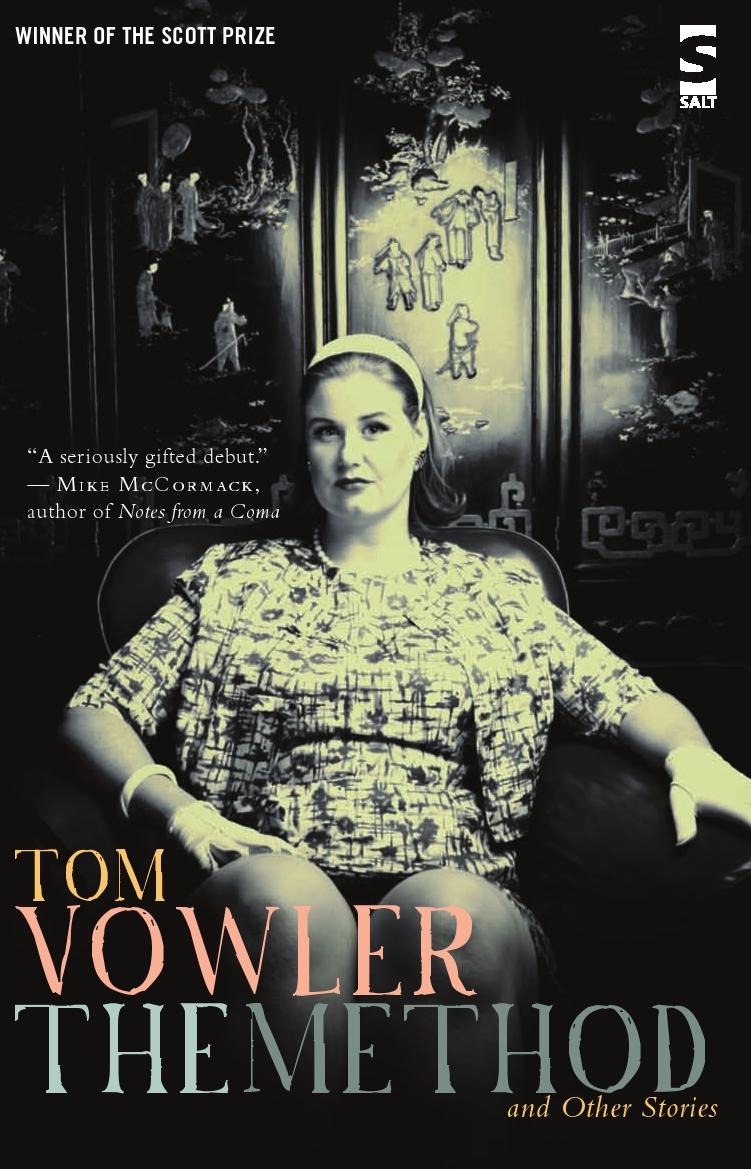
Tom is the author of the excellent and Scott-prize-winning collection The Method and Other Stories, published by Salt in 2010, and the forthcoming novel, All that Binds Us, which is a dark psychological thriller set on Dartmoor. On the subject of locations, I thought I'd first ask Tom the questions I've asked all those who've taken part in my Writing & Place series. And then we have a chat about his short story collections.Enjoy!

Tania: Where are you?

Tom: A stannary town on the edge of Dartmoor, in south-west England.


Tania: How long have you been there?

Tom: Just over a year, having been a decade in Plymouth.


Tania: What do you write?

Tom: Literary fiction, I suppose, though my agent has just described my novel as a psychological thriller. Short stories too.


Tania: How do you think where you are affects what you write about and how you write?

Tom: I actually moved here in order to finish my novel, which is set in the uplands of the moor. Visiting once a week didn't allow me to immerse myself fully in the landscape, which, for me, is one of the main 'characters' of the book. Research became a delight, learning about Dartmoor's history, its people, the flora and fauna. Watching the changing seasons, writing scenes where they occur, has given me a profound affection for the region, one I hope has permeated my fiction. Scenes in the moor's pubs were meticulously researched. :)


Tania: Yes, Tom, I have no doubt about that! Ok, onto The Method and Other Stories. Having just re-read the title story, it made me think of a question for you. I recently commented on a friend's blog post about the old chestnut, "writing what you know" and I said Well, while I believe in making things up, it's hard to write what you don't know, and perhaps writing and knowing are actually unconnected. What's your take, given that you the main character in your story goes to the most extreme lengths to get to know the main character in his novel...and you have actually moved house in order to better research yours?

"My own approach to research had never been this committed; if I wanted to write about something, I’d read about it. I’d Google the hell out of it and then use my imagination to make notes and diagrams, charts with lines linking characters, the complex worlds they occupied, their beliefs, histories, idiosyncrasies, what I thought they ate, how they voted. I’d construct their lives, give them voices, breathe life into them. I thought that was enough. But then, at a meeting with my publisher, the issue of authenticity arose." (From The Method)"


Tom:  I had some fun with that story, although it’s worrying how many people think it’s autobiographical in some way. It’s largely tongue-in-cheek, but does throw up questions on research and its thoroughness. The inspiration came from reading about the extent an actor had gone to for a part in search of authenticity, something we as writers also strive for.

Writing what you know is well and good, but would soon make for stolid fiction; you’ll quickly run out of subject matter, emotional experiences, anecdotes. And so we must venture into unfamiliar worlds, whether literally or vicariously, in order to assimilate the themes and people we’re writing about. Annie Proulx is a good example, someone who totally immerses herself in a community during composition, giving her a sense of dialect, of customs, the minutiae of a culture.

And, yes, moving house to be near the setting of my novel was a big commitment, but meant I could actually write scenes where they took place, or an hour after visiting them. The alternative was to go there only fortnightly and read about the place in between, which is always going to give you a second-hand account. I now have a profound love for the wilderness I’ve spent two years writing (among) and about.

But research isn’t always so edifying. The same book involved studying the darker aspects of human behaviour and I was glad not to do this first-hand.

Tania: I just noticed, rereading the excellent Seeing Anyone, the scientific imagery, "the earth's curvature", "like a distant star", "the Doppler effect", "a shape hidden within an optical illusion" . Does this reflect what you were reading at the time? Tell us more!

Tom: Good question – the scientist in you coming out! There was nothing overtly contrived in this, but I do have a wholly amateur curiosity in astronomy and physics (until their enormity and scope overwhelm me), and it’s likely some influence occurred there. On a conscious level, I suppose we search for the language, the imagery, to best describe a feeling or behaviour, and this works best for me if the simile or metaphor is somehow juxtaposed with its partner. And so with this rather elegiac story (and indeed with Staring at the Sun), I used aspects of the physical, scientific world to flank the most abstract, metaphysical of matters: love.


Thank you so much, Tom. You finish your tea (or G&T... or beer) while I tell the folks, whose appetites have surely been whetted, that they can purchase your book directly from Salt, or from Amazon or the excellent Book Depository and read the recent review by Melissa Lee-Houghton on The Short Review.  That's all for today, dusk is falling over the shed. Pictures soon, I promise!