Sunday, April 17, 2011

Revising short stories discussion Part II

(This blog post is very long, so I thought I'd turn it into a PDF too. See it here - please come back and comment afterwards! PDF with Parts 1 &2 here)

This began here...and it's become such an interesting discussion, focussing mainly on revising short stories, that I have been mulling it over and reading more about how different writers "do it", a kind of informal survey. I've asked members of my writing group, and there are brilliant comments on the first blog post, and I've been reading Paris Review interviews. I think what results is that there is no one way to do this. Revising/ reworking/re-dreaming your story is as much art as science.

Here's a selection of views on the subject - it's a long blog post but incredibly useful, for me at least. I am going to try a selection because I haven't found the way for me yet. I'd love to hear more from any of you - what works, what doesn't, any other ideas!

Here's what various writer friends said, on this blog and elsewhere:
I think too much and usually want to incorporate everybody's comments and suggestions, and the process becomes too analytical instead of heartfelt. I actually end up becoming sick of the whole thing and losing whatever emotion or soul I initially had, going into it ... I myself find that my best work are always written in white heat and rarely need to be tinkered with after the first draft. White heat...writing in the zone...lucid dreaming...starting with a fresh page...seems all very "right brain" to me. Left brain = editor head, while right brain = creator head? (Michelle Tandoc-Pichereau)

There is a state that I have on occasion got into (not very often, I wish I could) in which the words just flow: I come up with a sentence and it just leads to another and another and I look at the words on the page and think, where did that come from? Like I said, writing doesn’t often work like that for me. But when it does, I find it really hard to revise what I’ve written. It is what it is: either it comes out perfectly formed (I wish!) or I find myself completely at a loss as to how to fix it. The thing I can’t get back is the voice, the fluency. I also have a different way of writing, much more usual for me, which I don’t especially recommend, which is tortuous and painstaking and slow. But when I write like that rewriting is not a problem: getting the first draft out is the hard bit, and after that I feel like I know what I’m doing. (Emma Martin)

Robert Olen Butler does suggest that before revising anything substantially one should go into 'lucid dreaming' mode. I do do this before I put even one word on a first draft following an impulse of a story, and also before revision. Especially if something struck me as very off during a read through. I don't know if my experience revising a novel is of any value...perhaps it will open up the discussion, but since I am revising in chunks, perhaps talking about process might demystify it a bit.

E.g. I just went through one of the chapters in my novel yesterday. It's about 11,000 words. It's a very long chapter. There are some huge problems with it. The altercation between father and son sounds 'off', stilted, a little unreal. Also, I wanted to work in a couple of other threads that had been swimming and surfacing in various other sections and which I wanted woven more tightly in here. The chapter hadn't remotely done that.

In the past, a read-through with these many flaws engendered an overwhelming disgust, which I was then unable to swim past. It usually ended up with me partially chucking the story. For me, I'm not sure there's much of a difference between revising for a short story versus novel, except that in a novel, you can't afford to chuck it away. That would mean chucking away almost two years of consistent work!

The difference now is perhaps that I do make immediate mental notes as to the concrete things I think are not working. Then I go away. Let those feelings of disgust fade away. Usually takes about a week or so, during which I do other things. Read, chase my kids around, that sort of thing.

When I go back to read through again, if those same mental notes I made still ring through, I trust them. I revise based on that map. I almost without fail never think about craft elements. I don't do the checklist of plot/voice/structure etc. that there's some inordinate slippage into when I read someone else's story. So I think this is one fundamental difference between being a reader of my own work versus others. Having said that, I don't think craft elements don't work its way into revision. I think they become an organic part of a flaw. They are manifestations of a disease, not the underlying cause. Fix the underlying cause, the manifestation through 'voice' or weak plot etc. also goes away.  (Elaine Chiew)

Early on in a serious writer's life, the taking apart of a piece and reassembling it, following advice from peers is absolutely crucial. It's key to developing an instinctive grasp of craft, and allows us to be analytical in our stride rather than stop-starty, editor head v creator head. We need to learn to prevent those two modes of approaching work from being at odds with each other.

After a while I've found they work alongside each other invisibly, and when they do, that pulling apart and adding here and there will make a story less fluent, because when it was first written, the two were engaged, and if we revise with one head on, the story gets lopsided. ...So there comes a time when this is no longer the best mode for reworking pieces. It may work for some stories, but others need to be written again from scratch, to achieve that fluidity and unity.

There's one story in my collection that I rewrote, from scratch each time, about twenty times - different settings, different story telling modes. The version I ended up with was the only one that didn't feel clunky though it didn't get half way towards what I wanted it to say. But fiddling around with early versions led nowhere. It just had to come from a new sheet of paper.  (Susannah Rickards)

Oh goodness, I absolutely know what it is to write a story - a decent but still a little saggy story - and post for critique, come away with lots of useful, thoughtful suggestions and then use said thoughts and suggestions to KILL my story forever....Revision takes away the heart beat, the life of the story, and replaces it with coldness. But it shouldn’t have to meant that. It's to do with lightness of touch maybe. So as not to disturb the magic that's there whilst cleaning/shining lightly? (Sara Crowley)

I am really into walking ... as were the Surrealists, because it concentrates your thoughts, focuses them, and frees them up at the same time, your head has space and there's a rhythm.I find myself dipping in and out of ideas while I'm walking, I get so tuned in that ...I am practically a danger to myself and I don't notice anybody! It's all very routine, I choose virtually the same route every day, and I feel like it's just me and my creative process. I am not great when it comes to revision, I can get it all down on the page to begin, and then I go through and edit all the basics and then I get stuck. Very stuck.
And I'm so glad this has all been brought up here because I thought I was on my own with this. The more I dilute a piece with unsparing editing (which I something I am not averse to with my poems) the more I can't be bothered with it anymore. I have so many stories that I've done nothing with and probably never will, or maybe even can't do anything with, it's a shame. And ... I've had work taken apart by peers and haven't been able to mould it back together... it is weird, with the poetry I absolutely brutalise it sometimes. And that feels ok, maybe I have better instincts with poems because I'm more confident with them? I think a writer's main strength is instinct, trusting instincts and intuition, editing as you go along, getting caught in the heat of the moment. After that, there's a sober period where you look back on what you've done and doubts creep in... I think that by avoiding that hangover period after a first draft maybe that's key to seeing again with fresh eyes.(Melissa Lee-Houghton)

I find it hard to explain because it's more about (warmly) feeling something is right on the page rather than (coolly) cerebrally ascertaining something is right. It's a difficult question to answer because our feelings are ultimately produced in the brain and so, even though I say I'm revising by using my feelings, it is actually the brain that is doing it. When I write or revise it definitely feels more like an intuitive act rather than something that is consciously being controlled or directed. I also tend to revise as I write (as well as after I've 'finished' something) so the writing mode/editing mode are not too different for me. I hope this makes sense! (A J Ashworth)

I sort of think that if there are going to be changes then the whole thing has to start again - else, it's all a bit like trying to untie veins and plonk them somewhere else - the circulation gets messed up, and worse! (Rachel Fenton)

For me, some stories begin with an idea or mood. Words develop around that, but the original seed has to stay. Other pieces begin as bits but gradually acquire a heart. Others begin with a character in search of a plot. I don't think it's always right to re-trace one's steps when re-writing (a story can start on one track and end up on a completely different one) but it's worth remembering what made you want to write the piece in the first place. And not just remembering - keeping those early sketches and drafts. (litrefs)

Because of my sporadic writing schedule I tend to write in short bursts and can sometimes rewrite a paragraph twenty times from scratch. It always boils down to whatever works for you though I guess. One time I wrote a novella and after an edit I got a 3000 word story out of it (that one still stings a little) but as long as you get something you're happy with at the end I don't think it matters how you get there. I don't mind working for months to get perfection. (Alex)

I'm rubbish at working on/revising short stories. There's something in me that insists on the flow of the piece in its entirety, so every time I edit a part of the story I go back to the beginning and read it through again until I hit another part that 'doesn't work' according to the vision I have for the piece. Edit, and repeat. It takes far too long I'm sure, there must be a better way. (Clare King)

I am very jealous of anyone like [David] Vann who can write a first draft as a final draft. My process tends to involve writing in excess of what the story requires and then a trimming back to a shape that best fits the story revealed in the first draft. This can mean cutting out a third to a half of what I've written, shaping the rest as I polish.

This not to say that extra writing is wasted. The extra work gives me a deeper understanding of the characters, while the trimmed sections go into files for use later. I trawl through them from time to time for character stuff and description that will serve the story I am drafting or as a spring board for a new piece.

A little time consuming but the whole process is kind of like writing a block of text then scuplting it into shape, knocking chunks of it off as I go.

An interesting method of editing is Andrew Cowan's, I have heard him in interview explaining that he writes his first sentence, then redrafts that until perfect then writes his next and redrafts that until perfect and he continues this process for whole novels. Now that's what I call time consuming. (Dan Powell)

My method of revising/editing is as chaotic as my creative process. I was taught that you write (the first draft) for yourself, and revise with the reader in mind. But (for me) it's not that simple and there may be many drafts because it's in the process of writing, that I find a sense of my story and the revision process is about making sense of that story. Even if it's a short story, this often turns out to be a long process, especially when my thoughts on what I've written shift, which is inevitable over time. On my blog, I've been likening the process of revising/rewriting/editing to knitting; being prepared to unravel, pick up dropped stitches, rework the pattern, but really I think it's more instinctive than that, more like the creative process involved in painting. I know it's right when it feels, looks and sounds right. (Diane Becker)

What works for me is leaving it for a long time and then entering the text in a new creative headspace, almost rewriting it even if I might just change one paragraph to get it right. Dreamy creative is better than analytical in my world ... You have to leave your FEELINGS in even if you're clutching the red editing pen at the same time  (Louise Halvardsson)

Appreciating the strength of analysing the craft and applying that analysis to the editing process is fine. However - I do think we need to be flexible - and not slaves to any method at all. I think we need to embrace as many ways of doing this thing as we can, and understand that what will work one day, on one piece of work, may not be right for another, on another day.

I guess that when we get a way down the track, our understanding of our own drafting process can encompass some of the 'revision' process, as we go. So what comes out, has already been subconsciously smoothed.

I also think that might work for short fiction, flashes, shorter short stories - but the more complex a piece of becomes, the less likely it is to work well. So consideration of structure, how far it is working to deliver the end product you want, arches over the craft elements within. Thats how I approached revising my longer work recently. I think...(Vanessa Gebbie)

The received view seems to be that you are in a creative/right brain state for stage one (writing) and in an analytical/left brain state for stage two (revising) – there should be an unconscious creative burst followed by an analytical going over. But I think in reality it's more complex than that, as this discussion shows. To be honest, I don't feel such a big difference between the two stages. Maybe I'm just doing it 'wrong' - but when I write and also when I evaluate what I've written, I try to think it and feel it at the same time. (Emma)


I used to be all about the emetic first draft – I just got it all out on the page, beginning to end, before I edited a single word. Then I'd look at the thing as a whole and make big changes. Then the next rewrite would be smaller changes, and smaller and smaller until I'm just fiddling with individual word choices.

I've slowed down a bit over the past few months, both in terms of my overall output and how quickly I write each sentence. Now I find that my first drafts are slower, but with each draft I change fewer things. Maybe one day I'll get to the point where I perfect each sentence before moving on, but I doubt it. I prefer to find my way through the story as I go, rather than plan it all out beforehand.

That said, I love editing and rewriting. The blank page still scares me a little, and there's comfort in knowing that I have the framework of a story already there. (Kirsty Logan)

And here are quotes from other writers and an editor, most from Paris Review interviews, about what they do - and don't do:

Marilynne Robinson:
If I write something and don't like it, I basically toss it. And I try to write it again or I write something else that has the same movement. But as far as going back and working over something that I've already written -- I really don't do that. I know there's a sentence that I need, and I just run it through my mind until it sounds right. Most of my revision occurs before I put words down on a paper.
Truman Capote:
I am a completely horizontal author. I can't think unless I am lying down.... I don't use a typewriter. Not in the beginning. I write my first version in longhand (pencil). Then I do a complete revision, also i longhand. Then I type a third draft on yellow paper, a very special kind of yellow paper. No, I don't get out of bed to do this. I balance the machine on my knees.... When the yellow draft is finished, I put the manuscript away for a while, a week, a month, maybe longer. When I take it out again, I read it as coldly as possible, then read it aloud to a friend or two, and decide what changes I want to make and whether or not I want to publish it. I've thrown away rather a few short stories, an entire novel and half of another. But if all goes well, I type the final version on white paper and that's that.

Hemingway:
I always rewrite each day up to the point where I stopped.... I rewrote the ending to Farewell to Arms, the last page of it, 39 times before I was satisfied. 

 Jorge Luis Borges:
Interviewer: When you wrote your stories did you revise a great deal?
JLB: At first I did. Then I found out that when a man reaches a certain age, he has found his real tone. Nowadays I try to go over what I've written after a fortnight or so, and of course there are many slips and repetitions to be avoided, certain favourite tricks that should not be overworked. But I think that what I write nowadays is always on a certain level and that I can't better if very much, nor can I spoil it very much, either. Consequently I let it go, forget all about it, and think about what I am doing at the time. 

 William Faulkner:
Let the writer take up surgery or bricklaying if he is interested in technique. There is no mechanical way to get writing done, no shortcut. The young writer would be a fool to follow a theory. Teach yourself by your own mistakes; people learn only by error. ...
Sometimes technique charges in and takes command of the dream before the writer himself can get his hands on it. That is tour de force and the finished work is simply a matter of fitting bricks neatly together, since the writer knows probably every single word right to the end before he puts the first one down. ... The quality an artist must have is objectivity in judging his work, plus the honesty and courage not to kid himself about it. Since none of my work has met my own standards I must judge it on the basis of that one which caused me the most grief and anguish, as the mother loves the child who became the thief or murderer more than the one who became the priest.

Georges Simenon:
Adjectives, adverbs, and every word which is there just to make an effect. Every sentence which is there just for the sentence. You know, you have a beautiful sentence - cut it. Every time I find such a thing in one of my novels it is to be cut. 
Interviewer: is that the nature of most of your revision?
GS: Almost all of it.
Interviewer: It is not revising the plot pattern?
GS: Oh, I never touch anything of that kind. 
 
Gary Fisketjon, editor-at-large at Knopf. He has edited the works of Raymond Carver, Bret Easton Ellis, Patricia Highsmith, Cormac McCarthy, Jay McInerney, Tobias Wolff, and Haruki Murakami.:
[I]t all starts with the editing, which is when I see most clearly what distinguishes this particular book. […] In my comments, what I hope to do is akin to giving the author a fresh look at something that has been labored on so long that certain things have become invisible. Countless thousands of decisions factor into the writing of any book, and it defies mathematical odds that each and every one was the best decision; but after someone has rewritten sentences and chapters or whatever God knows how many times freshness is hard to come by[… That] can occur when the book is finally set in type, as opposed to whatever computer typeface was used on earlier drafts: suddenly a writer will say, Well, that looks funny, or doesn’t read right, or whatever. This is another means—though merely visually—of getting a fresh or different look at something one has looked at so many times before.

Dorothy Parker:
It takes me six months to do a story. I think it out and then write it sentence by sentence - no first draft. I can't write five words but that I change seven. 

Eudora Welty:
Often I shift things from the very beginning to the very end. Small things - one fact, one word - but things important to me. It's possible I have a reverse mind and do things backwards, being a broken lefthander. Just so I've caught on to my weakness.... I do [rewrite considerably.] Some things I let alone from the first to the last - the kernel of the story. You know enough not to touch something if it's right. The hardest thing for me is getting people in and out of rooms - the mechanics of a story. ...I find that very challenging, especially to describe an action that I don't do very well myself, like sewing.

Alice Munro:
I don't grasp it very readily at all, the "it" being whatever I'm trying to do. I often get on the wrong track and have to haul myself back... I could be writing away one day and think I've done very well; I've done more pages than I usually do. Then I get up the next morning and realize I don't want to work on it anymore. When I have a terrible reluctance to go near it, when I would have to push myself to continue, I generally know something is badly wrong. Often, in about three quarters of what I do, I reach a point somewhere, fairly early on, when I think I'm going to abandon this story. I get myself through a day or two of bad depression, grouching around. And I think of something else I can write. It's sort of like a love affair: you're getting out of disappointment and misery by going out with some man you really don't like at all, but you haven't noticed that yet. Then, I will suddenly come up with something about the story that I abandoned; I will see how to do it. But that only seems to happen after I've said, No, this isn't going to work, forget it.
 ...The whole process might take up to a week, the time of trying to think it through, trying to retrieve it, then giving it up and thinking about something else, and then getting it back, usually quite unexpectedly, when I am in the grocery store or out for a drive. I'll think, Oh well, I have to do it from the point of view of so-and-so and I have to cut this character out, and of course these people are not married, or whatever. The big change, which is usually the radical change...
I don't know if it makes the story better. What it does is make it possible for me to continue to write. That's what I mean by saying I don't think I have this overwhelming thing that comes in and dictates to me. I only seem to get a grasp on what I want to write about with the greatest difficulty. And barely. ... I can see the ways a story could go wrong. I see the negative things more easily than the positive things. Some stories don't work as well as others, and some stories are lighter in conception than others. They feel lighter to me. 

Just in compiling all this I feel better, better about not knowing what I am doing, how I do what I do when it works, how to fix something when I feel it just isn't working. I especially feel heartened by that last quote from Alice Munro. I think perhaps it in some way this and other people's comments validate my feeling that I need to not focus too hard at the thing I am working on - although I "look away" by playing online scrabble rather than going for a walk or to the grocery store! Well, I am still working this out. Anything that you do that no-one's mentioned? Let's keep this discussion going.


Addendum:
I was pointed towards Wells Tower's revision process, here's a quote from an interview in the Iowa Review:


Sarah Fay: You revised these stories for eight years. Is that right?
Wells Tower: Something like that. I did such violent revision to the stories that my editor started to worry about me. To some extent the revisions were informed by trying to make the story better, but it did get to a point where I would just keep revising and revising and revising not out of any real editorial intelligence but just because I wanted to be a better writer than I am. My feeling about revision is that we don’t really know what our stories are about even after the fifth or sixth draft. It’s not until I’ve got some distance from a story that I can look at it and see that there is actually a real emotional problem that the story is hinting at. Then the process of revision is about choosing characters, and scenes, and moments, and style that will get at that emotion in the most effective way.
SF: You’ve said you revised the story “Retreat” kamikaze-style.
WT: It was originally published in McSweeney’s from the point of view of the younger brother. The younger brother is this smartass who is pretty sympathetic, and his older brother is this terrible blowhard. The older brother behaves badly and continues to behave badly and is ultimately punished for his bad behavior by ingesting a possibly lethal bit of rotten moose meat. To me, that seemed like a flat line on the moral complexity curve. When I revised it, I thought it would be such a better story—a more interesting assignment—to try to tell it from the standpoint of the unsympathetic character. So that’s what I did.
SF: Do you treat all of your revisions as “assignments”?
WT: I did similar things with a lot of the stories. Often I didn’t look at the first draft when I went back to revise. “Revision” was writing a new story, trying to germinate a new story from the initial bit of inspirational DNA.

Friday, April 15, 2011

A first: Two Stories in One Day

I'm laid up with a flu-type thing, no voice at all but much wooziness, which means, to my immense sadness and frustration, I won't be chairing the session on short stories at the Cambridge WordFest tomorrow with Vanessa Gebbie and Andre Mangeot. Dammit. If you are near there, tickets are going fast, it'll be great!

To cheer me up, today witnesses a first for me: two stories published in one day: In triplicate in Metazen and Tiny Unborn Fish in the science-themed issue of Litro. Very nice news, both are fantastic publications I've had the honour of being published in before, do support them. Litro is also a print publication, "100,000 copies are distributed monthly around London and the UK, including in underground stations, libraries, galleries, bars and cafes, as well as online."

I am now going to spend a quiet weekend reading. I just devoured the new Fred Vargas book, An Uncertain Place, totally wonderful. And new books by writer friends recently received include Melissa Lee-Houghton's A Body Made of You and Meg Pokrass' Damn Sure Right. I can't see the carpet around my bed, it is heaving with books... as it should be. Nice.

Thursday, April 14, 2011

Carol Emshwiller on the Bat Segundo show

Carol Emshwiller is my new favourite author - I've been devouring her short stories and one of her novels, I love her surreal, fantastical prose. She has just turned 90 and we just did a wonderful email interview to accompany the review I am going to write of her Collected Stories - despite the fact that she is losing her sight. An amazing person, we had a lovely email chat. She was really interested in my writing, so much so that I just sent her a copy of my book - even if she can't really read right now, I just like the thought of it being on her shelves.

And now I am listening to her being interviewed on the Bat Segundo show, and it's 50% her laughter! And 50% a fascinating insight into a very long writing life, that is most definitely still continuing. A little taste:
"I think I don't plan ahead but the plot is in my fingers....I know enough not to be nice to my characters."
 Listen to it all here - or read excerpts here. Highly recommended!

Friday, April 08, 2011

Win beautiful books - come and read your science-inspired fiction and poetry!

(cross-posted with the Bristol University Science Faculty Blog)

On April 19th at 6pm at the fabulous Grant Bradley Gallery in Bristol, I am hosting an open mic night for fiction and poetry in any way inspired by science. This is part of the amazing Changing Perspectives month of exhibitions and activities bringing together art and science.. This event is completely FREE to attend (but booking is required, click here) and you can win one of several great prizes, including these books:


The White Road and Other Stories by Tania Hershman (yes, that's me)

I will be judging, and the theme of the evening can really be interpreted however you like - any genre, any style, as long as something scientific in some way was the inspiration. (I wrote more on my thoughts about this on the Wellcome Collection blog)

To prepare for the open mic, I will be jointly running a science-inspired fiction workshop on Wed 13th April, which once again is completely FREE, at the Grant Bradley Gallery, 2-4.30pm - booking is required, see here. Come and write!

Wednesday, April 06, 2011

Dublin Review of Books flash contest

While I am contemplating my follow-up blog post on revising short stories, here, thanks to the excellent Nuala, is news of a flash fiction contest well worth entering: 

The Dublin Review of Books has announced its second Flash Fiction Contest. They say: "The prize will bring recognition to distinguished flash fiction writing from within Ireland and around the world."

Winner receives €1,000. Second and third place will each receive €100. The top three stories will appear in The Dublin Review of Books.

Final judging will be made by authors James Ryan, Eilis Ni Dhuibhne and an editor from the drb.

GUIDELINES:
•           Submit up to 3 flash fiction stories of no more than 500 words apiece. Work must be previously unpublished. Simultaneous submissions are not accepted. Copyright will remain with winning authors. The drb reserves the rights to use winning entries up to one year after publication.
•           Manuscripts must include a cover letter containing name, address, e-mail address and/or telephone number, and the title of each work.
•           Entry fee is 10 Euro per story. Payment can be made through our PayPal account when submitting an entry.
•           Deadline for submissions is June 5, 2011 at 5 pm Dublin time. Entries received after this date will not be read. Only winning authors will be contacted.
•           Winning stories will be announced September 30, 2011.
•           Writers may submit through our online form (see details at www.drb.ie) .
•           Submissions may also be made via email. Please include surname and first name in the subject line. If submitting via email, please paste stories in the body of the email AND send as an attachment in one of the following formats:
.DOC (Microsoft Word)
.RTF (Rich Text Format)
EMAIL ADDRESS
flash@drb.ie

Tuesday, March 29, 2011

Changing Perspectives - videos inspired by science-inspired fiction

The launch on Friday of Bristol University's Changing Perspectives art/science exhibition at the Grant Bradley Gallery in which I have several art pieces (my first time ever attempting a piece of artwork featuring some of my stories) was great fun! Do try and get down there if you are in Bristol - and check out all the events during this month long celebration of art inspired by science.

If you can't make it, here are two brand newly-commissioned films inspired by two of my short stories - which in turn were inspired by science. Enjoy!


'We are All Made of Protein but Some of us GLow More than Others ' from richard ocallaghan on Vimeo.

Read the short story of the same title that inspired this piece here.


'Like Flowers' from James Murray-White and Steve Mazillius on Vimeo.

Monday, March 28, 2011

New flash story in Metazen

I am totally and utterly bloody thrilled to be in the fabulously nutty Metazen with a new flash story, Retreating, I Retreated. Love Metazen. Love it. (5th story published this year already, I feel like that might be a record.) Got another story coming out in Metazen mid-April. How lucky am I?

Thursday, March 24, 2011

Photos of the Writing Shed

Very interesting discussion on revising short stories going on in the last blog post - and I am going to write more about that, I think it's a vital topic. But while I mull and gather opinions, here are the shed pics I've been promising this for a while! The writing shed is finally ready - and it is bliss! Here is a pictorial journey from start to finish:


Existing shed in the garden when we moved in...


 ...was a little cluttered...


We moved all the clutter out, and our wonderful builder, Simon, started work on the insulation...


...until it looked a little like a sauna.


Then I started moving my things in, including my crucial Einstein "Imagination is more important than knowledge" poster...


and all my short story collections on the shelves above and below the window...

Look at all those lovely books!


Simon even made me a special inner door for extra privacy. And a corner nook where I can work standing up (like Hemingway).

and also a desk.


Now all that remains is for me to spend lots of time in there and produce work worthy of such a shed!

Tuesday, March 22, 2011

Revising short stories - science or art?

So, I've long subscribed to the theory of revising that says you need to do it with your "analytical" head on, that it's not a creative act, almost more of a scientific one. This is the type of revision I always felt I should be doing. But I rarely do and I feel guilty about that, as if I'm not a proper writer, or something. This week I took a first draft of a story and sat in my writing shed (yes, pictures soon!) for 2.5 hours, with NO INTERNET and did that kind of analytical revising, trying to "fix" or "solve" issues my writing group had drawn my attention to. Boy was I pleased, I had written some new scenes that did seem to do this, how wonderful!

Then I read it the next day, and felt that something was really wrong. I had put in more of this, less of that, plugged some gaps, but the whole nature of the story had changed. It had had a sort of magical and non-closed ending and now it was no longer magical, it was very harsh. I showed it to my writing group again and they all, without prompting, said the same: they preferred the first version. So, by approaching it analytically, I messed it up completely.

Since then, I've been canvassing opinion from writer friends about their processess. I don't even want to call it "revision" (which does remind me of school). Let's call it "working on" a short story. It seems that I should have asked sooner, because it might have saved me some guilt! Quite a few writers go back into that dreaming "zone", that creative space, to work further on a story, rather than switching hats and turning on some Editor with a capital "E". So, what do you do?

One friend looked through the Paris Review interviews and found this from Marilynne Robinson:
"If I write something and don't like it, I basically toss it. And I try to write it again or I write something else that has the same movement. But as far as going back and working over something that I've already written -- I really don't do that. I know there's a sentence that I need, and I just run it through my mind until it sounds right. Most of my revision occurs before I put words down on a paper."
What works for you? I think the message here - I assume - will be that different tactics work for different people. Let's share some!

Saturday, March 19, 2011

New Yorker and Janet Frame on creativity

I am always on the lookout for different ways to approach creativity and especially writing, this odd thing that we do, and this weekend I found some excellent quotes in the New Yorker and in Janet Frame's astonishing and often sublime The Daylight and the Dust: Collected Stories.

The New Yorker article by Dana Goodyear is about Barry Michels, a kind of therapist to the Hollywood entertainment industry, but about work, not about their fraught love lives, etc... So much of Michels' counselling techniques made sense to me, got me thinking. For example, when dealing with a screenwriter who couldn't write, "Michels ...told the writer to get an egg timer. Following Michels' instructions, every day he set it for one minute, knelt in front of his computer in a posture of prayer, and begged the universe to help him write the worst sentence every written". The writer thought this was stupid and pointless. But,  what do you know? It worked... "six weeks later, he had a 165 page script... when the movie came out the writer won an Academy Award". There surely can't be a more compelling way to start an article!

Michels and his colleague are working on a self-help book that basically involves "patients [being] told to visualize things going horribly wrong". Not sure about that, but this spoke to me:
"By far the most common problem afflicting the writers in Michels' practice is procrastination, which he understands in terms of Jung's Father archetype. 'They procrastinate because they have no external authority figure demanding that they write,' he says [Ah, does this ring a bell? Sure does! T] 'Often I explain to the patient that there is an authority figure he's answerable to, but it's not human. It's Time itself that is passing inexorably...Every time you procrastinate or waste time, you're defying this authority figure.' Procrastination, he says, is 'a spurious form of immortality,' the ego's way of claiming that it has all the time in the world. Writing, by extension, is a kind of death."
What Michels' makes his client do, in the face of this, is sit in front of their computer for a fixed time each day and say "I am surrendering myselt to the archetypal Father, Chronos. I am surrendering myself to him because he has hegemony over me." An interesting suggestion, I may well try that. You can read the whole article here.

Talking about procrastination and time wasting, I was very struck by a story in the Janet Frame collection, the daylight and the dust. I  had never read anything by her, I got this collection out of the library, read the first story and though, This isn't for me. Yet, I kept renewing it, something telling me not to give it back yet. And whatever that something was (Father Time??), it was right. I read a story from the middle of the book and was absolutely blown away. Her writing is stunning, poetic, rhythmic, hard-hitting, moving, shocking. It really really spoke to me, I loved what she did with language, I could hear it singing to me in my head and for the first time ever I was compelled to read a story out loud

One of the stories that I wanted to mention here is the Pleasures of Arithmetic. Basically a two-page flash story about the mind-numbing effects of television:
"Each night in each of these ten living rooms there are ten times how many people watching the same programme, receiving news bulletins (the diminutive of bullets, listening to the same music, and in the end thinking the same thoughts, in the end hosts only at the point of a gun to thoughts donated to them by courtesy of the television company... Thoughts in identical clothes... dull suspicion, criticism, my house is yours....
'What we need,' said the politician, 'is unity.'
'Our aim,' said the poet, 'is like-mindedness'."

A cautionary tale against abdicating our own thoughts in favour of mass mind control  - the remedy is to be found in another story, One Must Give Up, in which the narrator gives up the newspaper, the radio, the television:
"I am now a maker of my own news, a distributor of my own time. I receive news which no-one thought to broadcast on radio or film for television or report in the newspapers. I choose for myself again. it is long since I knew such freedom. Tight-lipped runners arrive bearing word from far countries - from friends two streets away. The cherry tree is in flower."
I love that line, that news has become something that comes from "friends two streets away". Frame hammers the message home beautifully at the end of the story:
"Fact or fancy. There comes a time when one must rely on one's own news, images, interpretations, when one must resist the pressure upon one's house of conforming, orthodox, shared seasons, and use the panel in the secret room, make one's escape to fluid, individual weather; stand alone in the dark listening to the worm knocking three times, the rose resisting, and the inhabited forest of the heart accomplishing its own private moments of growth."
Just typing that has made me shiver all over again. This was written in an age before Facebook which purports to bring its users "news" constantly, but in this ever-streaming babble, where is the sound of the "worm knocking" or our own heart's "private moments of growth"?

ADDENDUM
I couldn't find a Janet Frame story online, but here's a radio interview with her on YouTube.

Wednesday, March 16, 2011

Tonight at Wise Words!

First, a new flash story of mine is in PANK magazine's March issue: That Small Small Inch. Love PANK, I can't wait to read the rest of the issue.

And tonight, (Wed 16 March) if you are in London, I am taking part in Jay Live, sharing the bill at the Wise Words festival with these fabulous writers: Jay Merill, Elizabeth Baines, Sarah Salway, Catherine Smith and Susannah Rickards! We are reading at at 6.30pm The Luxe, Spitalfields,, and it's FREE! .. THE LUXE Spitalfields 020 7101 1751 is at 109 Commercial Street, E1 6BG Liverpool St tube. Here's the info. Hope to see you there!

Friday, March 11, 2011

Nice short story and flash news

The loveliest news is that I got a reply from Professor John Mullan in response to my email about the Culture Show's 12 New Novelists program - asking whether it might be possible to do it for short story collections (see earlier blog post). He said:
"I do sort of agree with you - at least with the idea that it would be great to do a programme on the contemporary short story. From my point of view, it rather depends on whether the BBC want me to any more such book programmes. If and when they come to me for ideas, the short story is one thing that I'll suggest. I'll let you know if it ever happens."
I think that's very positive - now we just need the BBC to step up. Am awaiting a few more email replies from those who might be able to take it further. Fingers crossed!

And on a more personal note, I just found out that I'm a semifinalist in the Vestal Review Ten Years in Flash Fiction contest and my flash story, Maneouvres, for which I have been trying to find a good home for about 2 years, will be read by the final judge, Steve Almond! There's nothing like the feeling that a writer you greatly admire will be holding your work (or staring at it on screen, of course). Lovely. Winner announced March 31st but this is a great boost, especially for an older story I had almost given up on. Congrats to my fellow semifinalists: Doug Cornett, Tessa Mellas, Greta Schuller, Ronald Jones, Cynthia Litz, Lili Flanders, Bruce Rogers, Tasha Cotter and Madhu Narayan.

Sinus update:

Half face is still slightly swollen but I was recommended Neilmed through Twitter (thank you, you know who you are!) and started using it this morning, things seem to be improving.

Thursday, March 10, 2011

Few upcoming deadlines for you

Three weeks until March 31st and here are 2 lovely comps to send your darlings to before that date:


Short FICTION is accepting submissions for its 5th annual Short Story Competition from 1 January - 31 March 2011. This year's prize money is increased to £500. Stories must be no longer than 6000 words. All submissions must be unpublished in print or on the web. Also new this year, we invite entries from writers at any stage in their career. Award-winning Irish writer, Gerard Donovan will act as final judge. Mr Donovan is the author of three novels, including the much-landed Julius Winsome, and the story collection, Country of the Grand. A £10 entry fee allows entrants to submit up to two stories; all entrants receive a copy of the journal with the award-winning story in it (which itself retails for £10... effectively making the competition entry free). All stories submitted will be considered for publication in the journal. Please note: no changes to stories can be accepted after submission. The winner of the competition will be announced on our website no later than 1 May 2011.


Bristol Short Story Prize: (for which I am one of the five final judges again this year):
Stories can be on any theme or subject and are welcome in any style including graphic, verse or genre-based (crime, thriller, science fiction, fantasy, romance, historical etc.). While there is a maximum word count of 3,000, it should be pointed out that there is no minimum. The 20 shortlisted writers will be invited to an awards ceremony in Bristol on July 16th 2011 when the winners will be announced and the BSSP Anthology Volume 4 will be launched. Prizes and anthologies will be sent to any shortlisted writer unable to attend the awards ceremony.
Prizes :
Ist- £1000 plus £150 Waterstone’s gift card
2nd- £700 plus £100 Waterstone’s gift card
3rd- £400 plus £100 Waterstone’s gift card
The other 17 writers who feature on the shortlist will be presented with a cheque for £100.

All 20 shortlisted stories will be published in both print and ebook versions of Volume 4 of the Bristol Short Story Prize Anthology.

So, for a grand total of £17 if you enter both comps, you could win £1500 +£150 waterstone's vouchers and you get a copy of SHORT Fiction too. Frankly, I think it's not a bad deal... I might see what I've got to send to SHORT Fiction, since this year it's open to all writers. And I'm looking forward to reading your stories for the Bristol Prize - remember, short is sweet too, give us something to read that we can't put down!

Good luck!

Wednesday, March 09, 2011

Short Story Collections on TV?

So, I'm at home today with bad sinus pain across one side of my face, and to take my mind off it all I watched the wonderful Culture Show episode for World Book Night about 12 debut novelists, including the excellent Jenn Ashworth. It was wonderful to watch a whole hour celebrating first-time novelists, hearing about their books, about their stories. But all the way through, that little voice in my head which is rarely satisfied kept whispering "What about debut short story collections? Where are the short stories?" Now I understand that this was a programme about novels - but the phrase "literary fiction" was used several times, and the novel is not the only form under that heading.

Several of the new novelists featured write short stories - Deborah Kaye Davies' short story collection, Grace, Tamar and Laszlo the Beautiful (reviewed on the Short Review here) won Wales Book of the Year in 2009 and she is also a published poet. I think it was Evie Wyld who mentioned in her interview on the show that she wrote short stories but wrote this novel because she was told that "publishers don't want short stories". No surprise there then.

Instead of grumbling and moaning too much, I wrote a tweet on Twitter asking who would like to see a similar TV show about short story collections - and the roar of response was deafening! It really cheered me up, and fuelled by this I fired off 3 emails to people I know with BBC connections, and also to John Mullan, the host of the Culture Show episode and very well known for the Guardian Book Club. As I write this I remember that he was the person who interview short story goddess Lorrie Moore last year about her must-have Collected Stories, an event I went to and which will stick in my mind as one of my short story highlights. So I have no doubt at all that he appreciates what an amazing short story can do.

I am writing this blog because doing all this in 140-character bursts on Twitter is rather restricting, and also to canvas more opinion. There was one tweet in reply which seemed to think there was quite enough short story coverage on radio and TV but I don't think those of us who disagree are just being paranoid. What do you think? Please comment below, perhaps I might need a petition in order to get the BBC - or another TV channel (Sky Arts? Mariella?) on side, so don't hold back!

Monday, March 07, 2011

Short story up on Necessary Fiction

I was delighted when Ethel Rohan, March's guest editor over at Necessary Fiction, asked me to submit a story for the Irish-themed issue. I spend a lot of time in Ireland, my father and stepmother live there, and some of my most amazing writing-related moments have been at Anam Cara, the heavenly writing retreat in West Cork. The story that is now published, Graveside, represents a first for me: it is the first time I have had a story published with a character who has appeared in a previous story -  Mary Margaret of Drinking Vodka in the Afternoon, which I was commissioned to write for Radio 4 for a week of stories in 2007 commemorating the 50th anniversary of the launch of the Sputnik satellite. And she wouldn't leave me alone, she kept clamouring for more about her. In Drinking Vodka... she is 16, in a small Irish village. This new story takes place many many years later. I don't think you need to have read the first story... I hope not. Anway, it's here. Thank you Ethel!

Also, I was stunned to find my book on this Booktrust list of 10 British short stories, in the glorious company of writing mates Vanessa Gebbie and Adam Marek, and the wondrous AL Kennedy. That's made my month, if not my year!

Sunday, March 06, 2011

Sue Guiney's far East tour

I haven't written much about me on here lately, not had a lot of time, but i am working up to it! In the meantime, I am loving my friend Sue Guiney's blog posts from her Far East book tour for her Cambodia-set novel, A Clash of Innocents. She's writing and uploading pictures like the one on the left - and videos. You feel like you are right there with her. Check it out!

Wednesday, March 02, 2011

World Book Day - addendum

I just heard about Nicola Morgan's wonderful idea for World Book Day - while she understands that giving out 1 million free books should have a positive effect, she also wants to boost authors and publishers by getting people to buy a book in honour of WBD. Do go and read her blog and perhaps even pledge to join in!

World Book Day Event in Bristol

I'm delighted to be taking part in a World Book Day celebration here in Bristol, on Saturday night at the Grant Bradley Gallery. Here are the details, do come - and if you'd like to take part, there are contact details at the bottom of this blog post!

The largest Book Give Away Ever attempted!

World Book Night at the Grant Bradley Gallery
Hosted by the Bard of Windmill Hill Trevor Carter

Saturday 5th March 2011

Join us this Saturday 5.30 - 7pm at The Grant Bradley Gallery to collect your FREE copy of Margaret Atwood’s The Blind Assassin
Laura Chase’s older sister Iris, married at eighteen to a politically prominent industrialist but now poor and eighty-two, is living in Port Ticonderoga, a town dominated by their once-prosperous family before the First War. While coping with her unreliable body, Iris reflects on her far from exemplary life, in particular the events surrounding her sister’s tragic death. Chief among these was the publication of The Blind Assassin, a novel which earned the dead Laura Chase not only notoriety but also a devoted cult following.
Sexually explicit for its time, The Blind Assassin describes a risky affair in the turbulent thirties between a wealthy young woman and a man on the run. During their secret meetings in rented rooms, the lovers concoct a pulp fantasy set on Planet Zycron. As the invented story twists through love and sacrifice and betrayal, so does the real one; while events in both move closer to war and catastrophe. By turns lyrical, outrageous, formidable, compelling and funny, this is a novel filled with deep humour and dark drama.
The evening’s events will also include:

  • A live set by local singer song writer Barry Walsh
  • Performance poetry by the Bard of Windmill Hill Trevor Carter
  • Readings from the Blind Assassin
  • A chance to meet and discuss your favourite books
  • A display of local publishers books

If you are interested in doing a short presentation on your favourite book or reading, we would be delighted to hear from you. Please contact Trevor Carter windmillbard@aol.co.uk to tell us about your choice of book and arrange a slot. We look forward to hearing from you!

DRINKS & REFRESHMENTS PROVIDED!!!

Thursday, February 24, 2011

Tom Vowler Talks

Well, my writing shed is nearly ready so I ask you to suspend disbelief and picture me and my guest today, Tom Vowler, sitting in there, sipping tea (or G&T... or beer) and chatting. Can you picture it? Here's what Tom looks like, if it helps (even though there is sea behind him, please disregard the ocean).


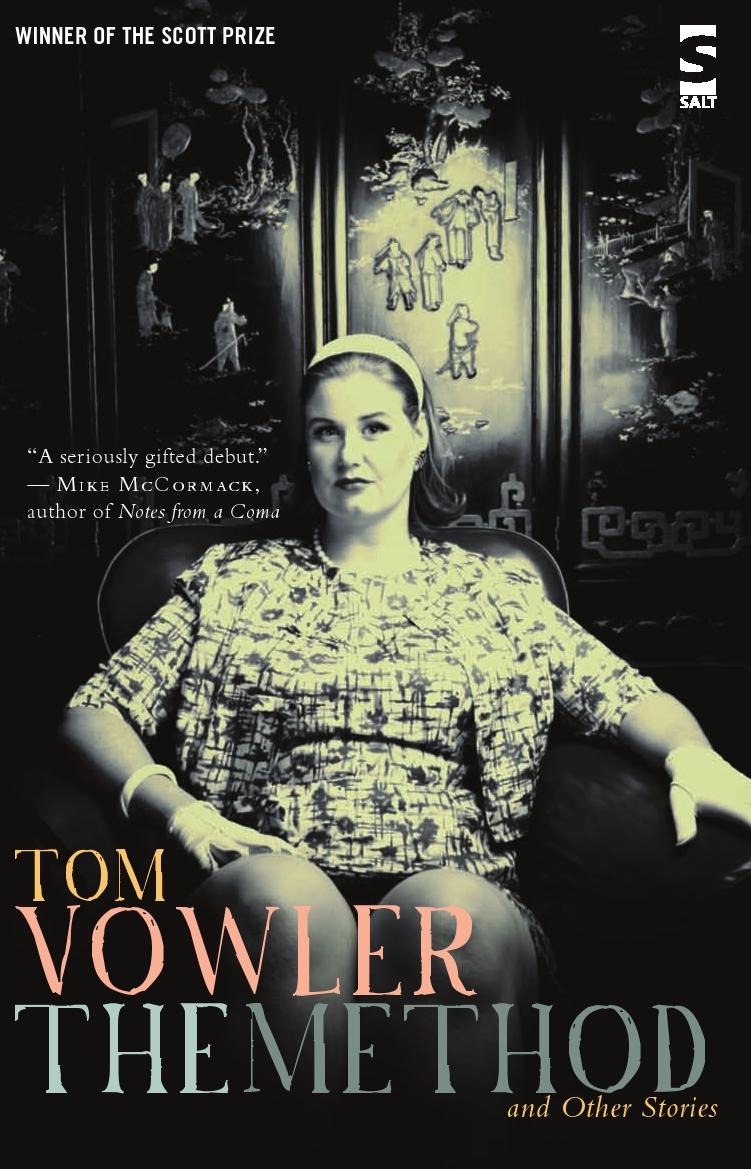
Tom is the author of the excellent and Scott-prize-winning collection The Method and Other Stories, published by Salt in 2010, and the forthcoming novel, All that Binds Us, which is a dark psychological thriller set on Dartmoor. On the subject of locations, I thought I'd first ask Tom the questions I've asked all those who've taken part in my Writing & Place series. And then we have a chat about his short story collections.Enjoy!

Tania: Where are you?

Tom: A stannary town on the edge of Dartmoor, in south-west England.


Tania: How long have you been there?

Tom: Just over a year, having been a decade in Plymouth.


Tania: What do you write?

Tom: Literary fiction, I suppose, though my agent has just described my novel as a psychological thriller. Short stories too.


Tania: How do you think where you are affects what you write about and how you write?

Tom: I actually moved here in order to finish my novel, which is set in the uplands of the moor. Visiting once a week didn't allow me to immerse myself fully in the landscape, which, for me, is one of the main 'characters' of the book. Research became a delight, learning about Dartmoor's history, its people, the flora and fauna. Watching the changing seasons, writing scenes where they occur, has given me a profound affection for the region, one I hope has permeated my fiction. Scenes in the moor's pubs were meticulously researched. :)


Tania: Yes, Tom, I have no doubt about that! Ok, onto The Method and Other Stories. Having just re-read the title story, it made me think of a question for you. I recently commented on a friend's blog post about the old chestnut, "writing what you know" and I said Well, while I believe in making things up, it's hard to write what you don't know, and perhaps writing and knowing are actually unconnected. What's your take, given that you the main character in your story goes to the most extreme lengths to get to know the main character in his novel...and you have actually moved house in order to better research yours?

"My own approach to research had never been this committed; if I wanted to write about something, I’d read about it. I’d Google the hell out of it and then use my imagination to make notes and diagrams, charts with lines linking characters, the complex worlds they occupied, their beliefs, histories, idiosyncrasies, what I thought they ate, how they voted. I’d construct their lives, give them voices, breathe life into them. I thought that was enough. But then, at a meeting with my publisher, the issue of authenticity arose." (From The Method)"


Tom:  I had some fun with that story, although it’s worrying how many people think it’s autobiographical in some way. It’s largely tongue-in-cheek, but does throw up questions on research and its thoroughness. The inspiration came from reading about the extent an actor had gone to for a part in search of authenticity, something we as writers also strive for.

Writing what you know is well and good, but would soon make for stolid fiction; you’ll quickly run out of subject matter, emotional experiences, anecdotes. And so we must venture into unfamiliar worlds, whether literally or vicariously, in order to assimilate the themes and people we’re writing about. Annie Proulx is a good example, someone who totally immerses herself in a community during composition, giving her a sense of dialect, of customs, the minutiae of a culture.

And, yes, moving house to be near the setting of my novel was a big commitment, but meant I could actually write scenes where they took place, or an hour after visiting them. The alternative was to go there only fortnightly and read about the place in between, which is always going to give you a second-hand account. I now have a profound love for the wilderness I’ve spent two years writing (among) and about.

But research isn’t always so edifying. The same book involved studying the darker aspects of human behaviour and I was glad not to do this first-hand.

Tania: I just noticed, rereading the excellent Seeing Anyone, the scientific imagery, "the earth's curvature", "like a distant star", "the Doppler effect", "a shape hidden within an optical illusion" . Does this reflect what you were reading at the time? Tell us more!

Tom: Good question – the scientist in you coming out! There was nothing overtly contrived in this, but I do have a wholly amateur curiosity in astronomy and physics (until their enormity and scope overwhelm me), and it’s likely some influence occurred there. On a conscious level, I suppose we search for the language, the imagery, to best describe a feeling or behaviour, and this works best for me if the simile or metaphor is somehow juxtaposed with its partner. And so with this rather elegiac story (and indeed with Staring at the Sun), I used aspects of the physical, scientific world to flank the most abstract, metaphysical of matters: love.


Thank you so much, Tom. You finish your tea (or G&T... or beer) while I tell the folks, whose appetites have surely been whetted, that they can purchase your book directly from Salt, or from Amazon or the excellent Book Depository and read the recent review by Melissa Lee-Houghton on The Short Review.  That's all for today, dusk is falling over the shed. Pictures soon, I promise!

Tuesday, February 22, 2011

Quick shout out

I had a wonderful time last week at the launch of my great friend Sue Guiney's poetry collection, Her Life Collected. There were several highlights to the event at the Lumen United Reform Church and Community Centre - the first being hearing Sue read a number of poems from the book, some very funny indeed, since she had decided to stay away from the "divorce, death and doom" poems for the night! The second thing that made it a very special event was finally meeting up with our blog friend Lauri Kubuitsile, her of the Thoughts from Botswana blog. Sue, Lauri and I had conducted a three-way blog chat about writing over the past few months, and meeting Lauri was just like carrying that chat over from the blogsphere into real life! And continue it the next day wandering around London (well really from one cafe to another one a few steps down the road...)

The third interesting aspect of Sue's launch was that it was also an open mic night, which the Lumen centre holds regularly, and I decided to take the plunge and read one of my poems for the first time. I'm quite used to reading my stories, although that was extremely scary the first few times. But poetry? With line breaks? Ok, it's a 6-line poem  - which will be published in Alba shortly, otherwise I would never have had the guts to presume to read amongst the poets. But I was really worried I'd screw up the line breaks somehow, I'd read it all wrong, even though I wrote it. Mad, eh?

Well, it went fine. Six lines, it was all over pretty quickly! And I was glad to have done it. Lauri also read, as did Sarah Salway, so short story writers were well-represented. I still wouldn't call myself a poet, but one day, maybe...

Talking about Sarah, who I had a lovely time with in London, chatting about the upcoming Arvon short story course we will be teaching in May....She and I - together with fabulous writers Elizabeth Baines, Susannah Rickards and Catherine Smith - are reading at Jay Merill's Salt Publishing short fiction event at the Wise Words festival in Spitalfields, London, on March 16th. See Sarah's blog for the info.

Sunday, February 20, 2011

2011 Sunday Times EFG longlist is out!

The longlist for the £20,000 Sunday Times EFG Private Bank Short Story Award - the richest prize for a single story (although only open to published writers) - has just been announced. An interesting list, it seems on first glance to be that there are more Big Names on it this year, maybe the Big Names realised that this is a serious amount of money and it would be foolish not to go in for it! Delighted to see Short Review authors Rob Shearman and Clare Wigfall there, along with Kevin Barry and Yiyun Li. Here's the full longlist:
  • Fabian Acker 'Nirvana'
  • Kevin Barry 'Fjord of Killary'
  • Meira Chand 'The Pilgrimage'
  • Will Cohu 'East West-West Coast'
  • Anthony Doerr 'The Deep'
  • Michel Faber 'In the Woods with a Dead Dog'
  • Roshi Fernando 'The Fluorescent Jacket'
  • Tibor Fischer 'Possibly Forty Ships'
  • Xiaolu Guo 'Life by Accident'
  • Sarah Hall 'Vuotjarvi'
  • Tobias Hill 'Not that it Matters'
  • Susan Hill 'Crystal'
  • Yiyun Li 'The Science of Flight'
  • Hilary Mantel 'Comma'
  • David Miller 'Fuck Being Happy'
  • Robert Shearman 'History Becomes You'
  • Erin Soros 'BC Almanac'
  • Louise Stern 'Black and White Dog'
  • Gerard Woodward 'The Family Whistle'
  • Claire Wigfall 'Professor Arvind'

You can read more about the longlisted authors here. I am particularly intrigued by Fabien Acker, who won "the BT award as science writer of the year", and Yiyun Li's story, because it has science in the title! Good luck to them all, the shortlist will be announced in a few weeks.

Thursday, February 17, 2011

Live Q&A tonight on Thresholds

I'm doing a live Q&A tonight on the fabulous Thresholds short story forum - do come and ask me something! Here are the details of how to join in:
I hope you will join us, tonight between 7:30 and 9:00 p.m. UK time, for our LIVE online Question and Answer session with the prize-winning writer and editor of THE SHORT REVIEW, Tania Hershman. Tips and Hints for helping the session to run smoothly: 1) Members need to be logged in to submit questions. 2) Questions are to be submitted using the Comments Box, below Tania's announcement. 3) Please submit separate questions, in separate comments boxes. 4) Use your REFRESH button occasionally throughout the session. For those unable to be with us, questions can be submitted in advance, using the Comments facility at the bottom of Tania's announcement. Further details about the event and links to some of Tania's stories can be found in the announcement on the front page of THRESHOLDS. http://blogs.chi.ac.uk/shortstoryforum/?p=3699 Hope to see you tonight!

Monday, February 14, 2011

Coming to you live from...

... my new writing shed! This is my first time in here, and although I had the most virtuous plans for it to be Internet-free, what do you know? The wifi actually gets all the way down the end of the garden! I might try and do something about that at some point, but while I am connected, i wanted to blog and say

WHOO-HOO!


So this is a bit of a Valentine's Day love post. A shed love post.

I've wanted a writing shed for years and years and years... and now, finally, I'm in it. There was a shed here when we bought this house, that was definitely one of the main attractions, but it needed to be insulated, so now it looks a little sauna-like, all pale pine, floor to ceiling. (Check out these amazing sheds in the meantime.)

Right now it just has electricity and a desk in, nothing else, because we're going to decorate, so no pics for the moment. It will have a single bed because I have come to understand the creative importance of being horizontal and thinking with one's eyes shut. (And napping). And our wonderful builder, Simon, is going to build me shelves including one that will allow me to work standing up when I need to. Seems a good idea for the back.

Anyway, that will happen soonish. But...here I am already! And I can hear the birds. And I can't hear much else except my fingers banging the keyboard. Any tips from you writers-in-sheds? Are you all web-less? Should I? Really...? Yes, yes, I know.

Ok, it's a bit chilly now. I couldn't manage to carry the radiator down the garden myself, but really need to, since it's February in England. I will sign off now. From the shed. The writing shed. Wheee!

Sunday, February 13, 2011

It's Story Sunday!

A little thing I started on Twitter a few months ago, StorySunday asks anyone to tweet a link to someone else's short story that's published online. It's basically for me to get new recommendations of stories... and if anyone else happens to enjoy it, then that's great! Anyway, here's my #storysunday widget, you can click on the links even if you're not on Twitter...

Thursday, February 10, 2011

Best British Short Stories 2012 Wants To Hear From You!

I mentioned a while ago that Best British Short Stories is back, resurrected by my publisher, Salt Publishing, and edited by Nicholas Royle. He has just finalised the list of stories for the first edition, the 2011 edition, which will be published in April 2011 (see the list here - I'm delighted that it includes No Angel by Bernie McGill, which I chose as 2nd prize winner in the Sean O'Faolain competition), quite a mammoth task, he is to be applauded! And now he wants to know what British short story writers are up to this year.

Similar to the Best American Short Stories model, Royle will be reading stories that have already been published between Jan and Dec 2011. He told me he wants short stories published "anywhere, could be in American publications or wherever. And not just literary mags – anthologies, newspapers, online etc." But before you get excited and start firing off your beautiful publications to him, he cautions: "People need to be selective, ie not like I was when sending to Giles Gordon & David Hughes for Best Short Stories, way back." If all of us bombard him with everything we have published this year, he will be swamped. So wait, think about it, be choosy. And check out the anthologies Nicholas has already edited (to start with, read The Short Review's review of '68: New Stories from Children of the Revolution).

And then, when you're ready, send them to:
n.royle@mmu.ac.uk or hard copies to Nicholas Royle at Manchester Writing School, Geoffrey Manton Building, MMU, Rosamond St West, Manchester M15 6LL
Good luck!

Addendum: As the lovely and generous Rachel Fenton pointed out in the comments, you could also recommend someone else's story!

Thursday, February 03, 2011

Jo Cannon's Far-from-insignificant Short Story Collection

It's a fantastic thing when a friend whose writing you greatly admire has a book published! Jo Cannon's first short story collection, Insignificant Gestures (Pewter Rose Press, 2010) is one of those short story collections that provoked in me a physical reaction. I gasped as I finished a story, I had to put the book aside, I felt something in me was roiling and unsettled by Jo's powerful stories. It's hard these days after reviewing so many collections for me to find unique adjectives to describe what stories do to me, but I find Jo does something quite different in her writing, somehow a melding together of experiences as a GP and travels in Africa. The results, which are sometimes quite odd and surreal, are stories with characters you can't shake once you've finished the story, situations which are both deeply affecting and also, in small ways, hopeful.

I'm delighted to be hosting Jo as part of her Virtual Book Tour! We had a chat about writing. Here's what she told me:

Tania: When did you first know/decide you wanted to be a writer?

Jo: I don’t really see myself as a writer, Tania! But in primary school, long before I wanted to be a doctor, my ambition was to be an author. Failing this, I would be a show jumper – the horse, not the rider. The time came when I accepted I would never swish my tail in a show ring. But I didn’t relinquish the hope that one day I would write a book. I wrote numerous novels in those days, in exercise books with the top half of the page devoted to illustrations in felt pen. Mostly twaddle about running away with gypsies or ponies, or both. I didn’t start writing stories again until my mid forties. I needed time to collect better material.
  
T: Why short stories? What does the short story do for you, as a reader and as a writer? 

J: The short story seems to be the genre that comes naturally to me. I made a couple of attempts at novels, but they were sewn up after 3,000 words. Time is an issue, of course. My writing tends to be intense and sporadic, so Insignificant Gestures took five years to write. Had I embarked on a novel I would have literally lost the plot. But I also think my job has pushed me into short stories. Every surgery feels like a collection.

T: What does the word "story" mean to you?

J: At the simplest level a story is a tale made up to entertain others. Ideally a short story should be intense and complete. It must be authentic, so that the reader understands how it feels to be someone else. The language should add meaning, for example, through metaphor. I admire this in other writers, but still have a long way to go!


T:  How does a story come to you? Stories come to writers in many different ways: an image, a first line, a voice. What's yours?

J: Usually it is an emotion. Either one I have experienced, or that someone, telling their story, has transferred to me. Sometimes the heart of a story is a powerful, often troubling memory – not always my own - which I exorcise, and give meaning, by turning into fiction. Other stories begin with a dreamy "What if?" For example, sitting in a traffic jam and considering what would happen if I never got out.

T:  How long did it take to write all the stories in this collection, and how did you decide what order to put them in?

J: The collection contains about two thirds of my work. Some earlier stories seem clumsy now, and I discarded them. When I considered that they might have a wider readership, some seemed too exposing of real people’s lives, or my own. My publisher rejected a few, chose which story to go first, and also decided on the collection’s title. I tried not to have too many first person narratives together, and followed sad stories with upbeat ones. I separated linked stories, but not too far, hoping the reader might be surprised to recognise the character from a previous incarnation. Eve appears at different ages and her stories are in chronological order, scattered through the collection, ending with her death. The book ends with Jam, which is a metaphor for Eve’s life, and life in general.

T: How does it feel knowing people are reading your book?!

J: I’m over-awed! And thrilled, of course. The book has already sold more than I, or my publisher, expected. I’m aware that a reader has expended a few hours of his or her life, and some hard earned dosh, on my book and I sincerely hope they feel it was worth it.

T: What are you working on now?

J: My ‘other’ job is really busy just now, so writing time is limited. And book promotion activities – like writing blog interviews! – are surprisingly time consuming. I feel the collection should get my best boot out into the world. But when all this settles down, I hope to get back to writing short stories again. I’ve learned so much in the last five years, I’m excited to think where the next five will take me.


Thank you so much, Jo, for those insights. We're exciting about where the next five years take you too! Find out more about the book and Jo's stories on her website, Jo Cannon.


Coming soon... blog interviews with Tom Vowler about his short story collection, The Method, and Andrew Oldham on his poetry collection, Lapwing.